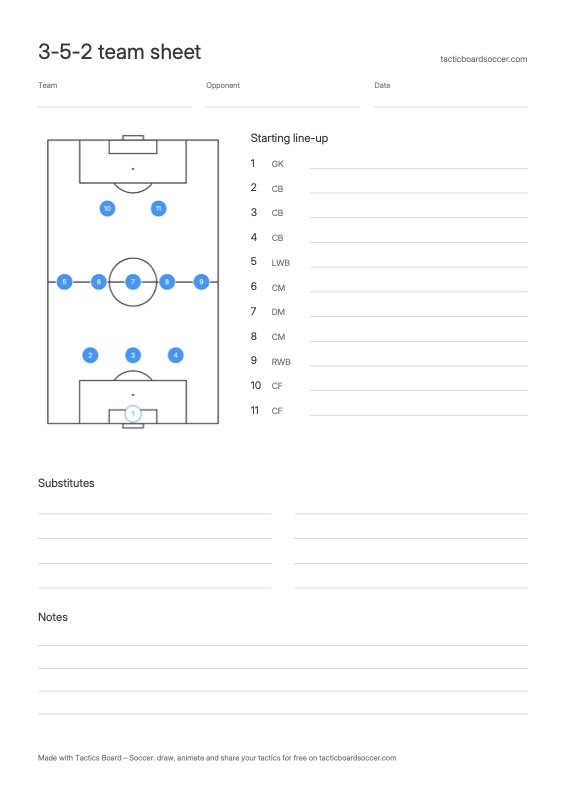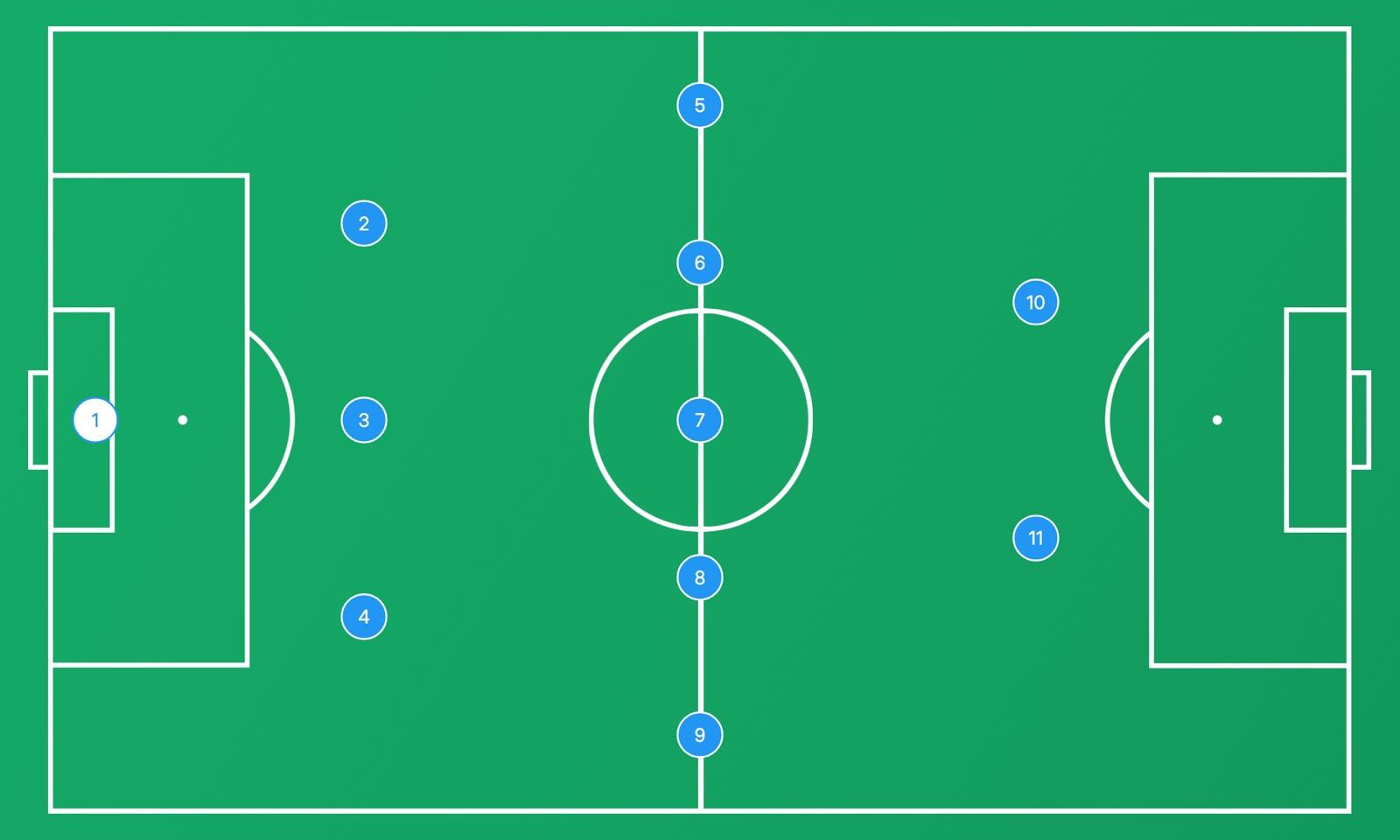
How the 3-5-2 lines up
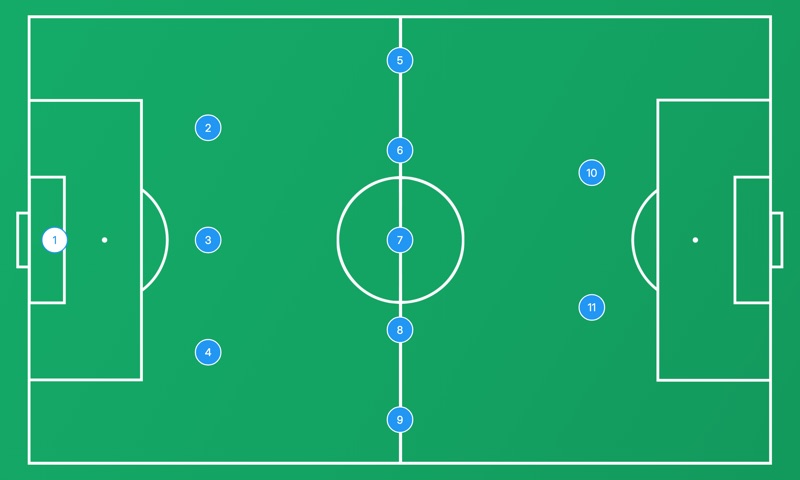
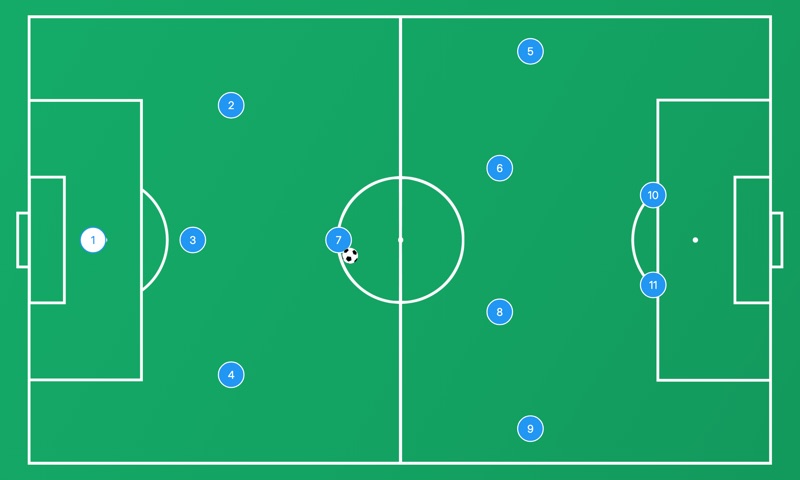
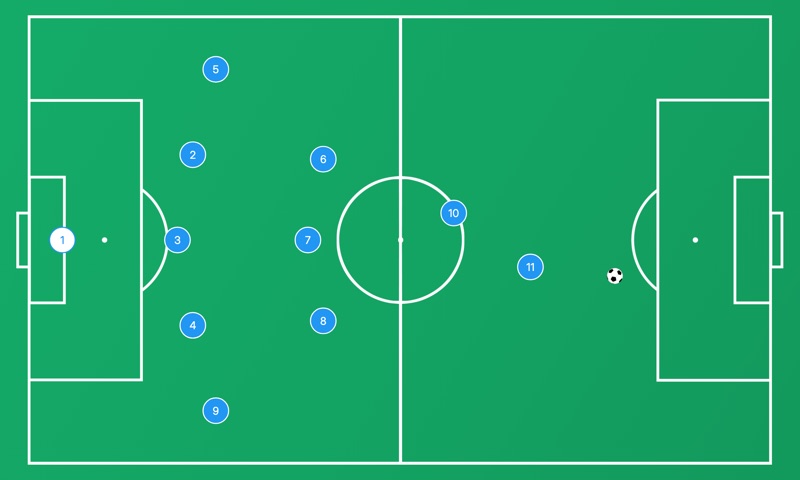
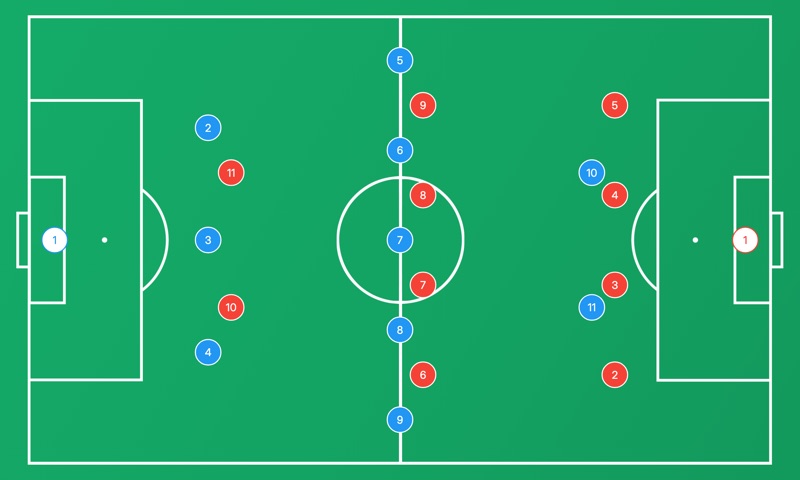
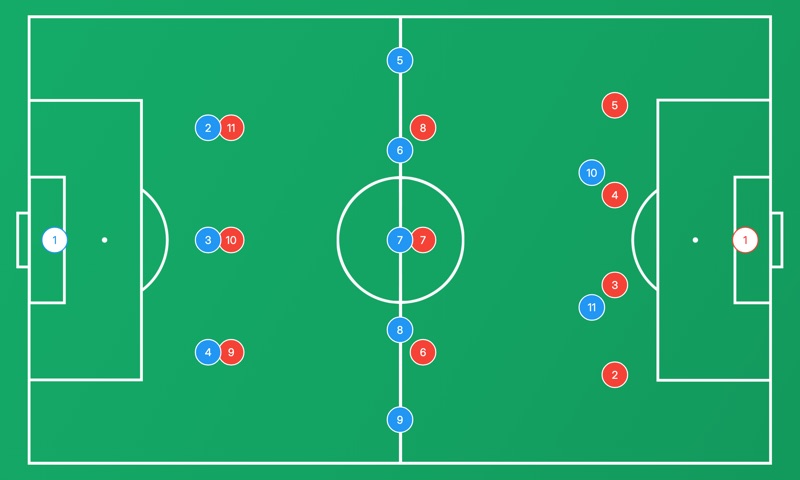
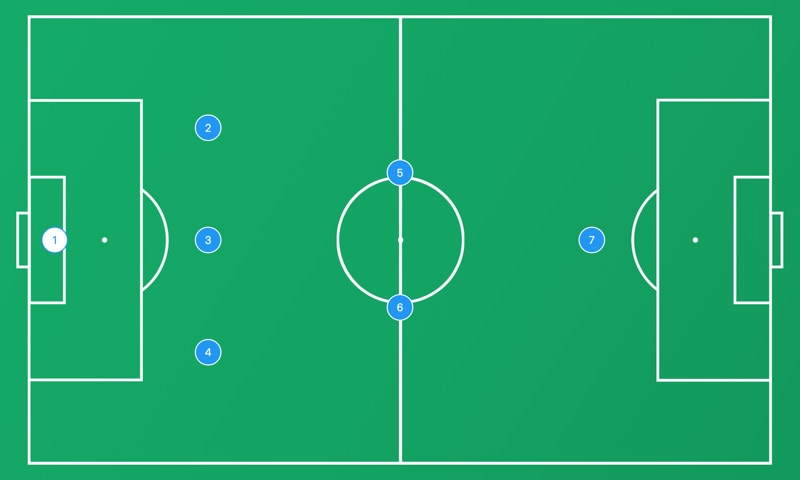
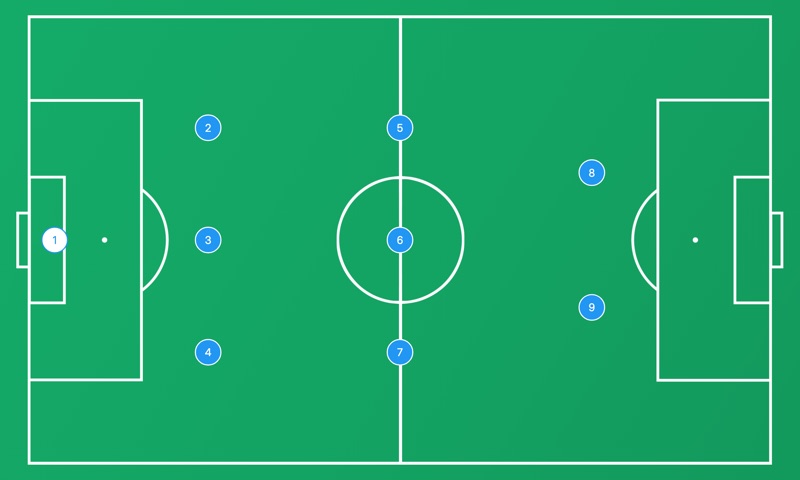
At the back there are three centre-backs: one in the middle who leads the line and two on the sides who can step out to the flank. The midfield has five players: a holding midfielder in front of the defence, two central midfielders beside him and, wide on each side, a wing-back who is both full-back and winger. Up front there are two strikers.
Everything depends on the wing-backs. When they are high, the team attacks with five players across the pitch; when they drop, the defence becomes a line of five. The same eleven players can play two very different matches, depending on where the two wide men stand.
Strengths of the 3-5-2
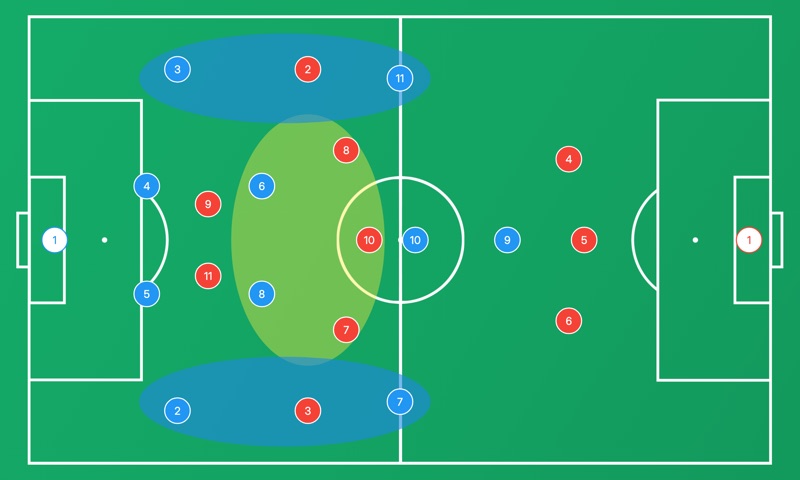
- Three in the middle of the pitch. The holding midfielder and the two central midfielders make three against two against a 4-4-2, and the team can keep the ball in the centre.
- A spare centre-back. Against two strikers the back three is always three against two, so one defender can step out or cover.
- Two strikers together. One comes short and the other attacks the space, and the opposing centre-backs never have a free player.
- Width from one player per side. A single wing-back holds the whole flank, which leaves more players free in the middle.
- Building from the back. With three centre-backs and a holding midfielder, the first pass out always finds a free player against a press of two.
Weaknesses of the 3-5-2
- Wing-backs who run all day. One player covers the whole flank, and when he is tired or caught high there is nobody behind him.
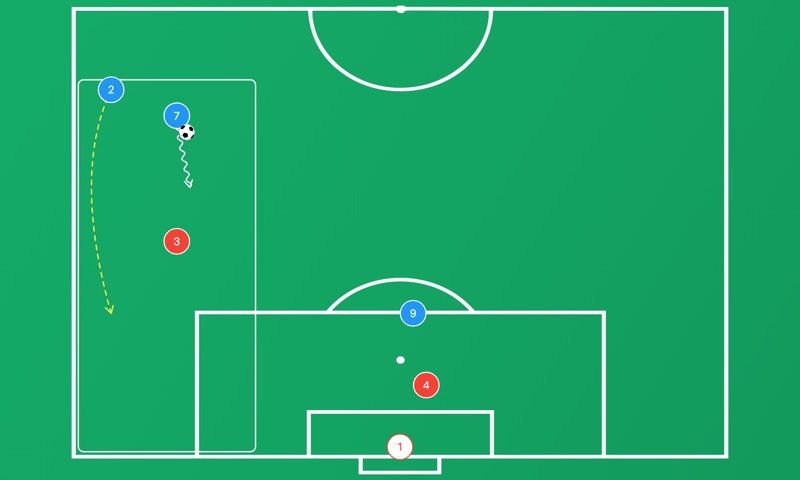
- Two against one on the flank. A winger and a full-back attacking together put the wing-back in trouble, and an outside centre-back has to come out wide.
- Space behind the wing-backs. When both push up, a quick long ball to the flank finds only the three centre-backs.
- Too deep without the ball. If the wing-backs drop too early, the team defends in a 5-3-2 and the two strikers are alone when the ball is won back.
- Three centre-backs against one striker. Against a 4-3-3 or a 4-2-3-1, two of the three may have nobody to mark, and the team is one player short in other areas.
Variants of the 3-5-2
- 3-1-4-2: the holding midfielder stays alone in front of the defence and the two central midfielders push up in line with the wing-backs. It is the usual shape with the ball.
- 3-4-1-2: two holding midfielders side by side and an attacking midfielder behind the strikers, who plays between the lines.
- 5-3-2: the wing-backs drop into the back line and the team defends with five. The same system, read from its defensive side.
- 3-4-3: one striker moves wide and the team attacks with three forwards, giving up a central midfielder.
How to beat a 3-5-2
The best formation against a 3-5-2 depends on your players, but the ways to beat it are always much the same:
- put a winger and a full-back on the same flank, two against one on the wing-back;
- attack the space behind the wing-backs as soon as they push up, with a long ball to the flank;
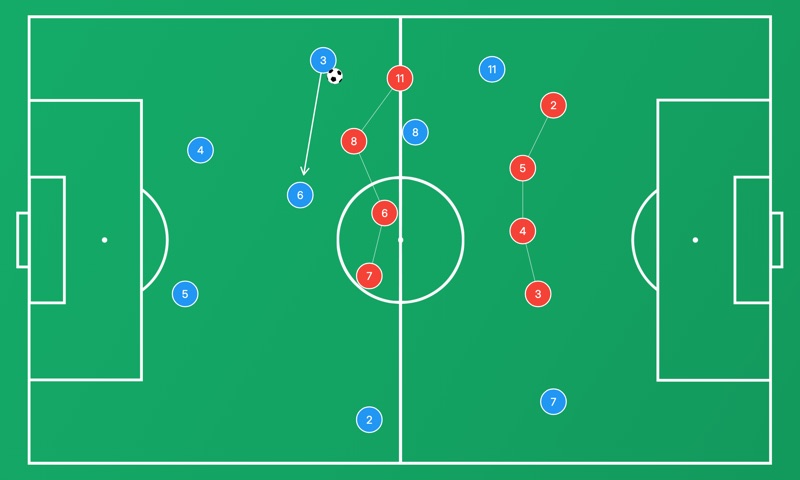
- press the outside centre-backs, so the build-up has to go through the middle where you have numbers;
- keep a striker high to pin the three centre-backs and stop one of them from stepping into midfield.
How to coach the 3-5-2
Start from the wing-backs and the outside centre-backs, with one simple rule: when the wing-back goes, the centre-back on his side slides wide to cover. Then work on the two strikers, one coming short and one going long, and on the central midfielders arriving in the box. Finally train the moment the ball is lost: the wing-backs drop into a line of five and the three midfielders close the middle.
Draw each exercise on the board, animate the movements frame by frame and send it to your players as a video before training.
Positions in the 3-5-2
| Position | Job in the 3-5-2 |
|---|---|
| GK · Goalkeeper | Starts the play short to the three centre-backs and covers the space behind the defence when the wing-backs are high. |
| CB · Centre-backs | The middle one leads the line and stays in the cover; the two outside ones step out to the flank, defend behind the wing-backs and carry the ball forward when free. |
| LWB, RWB · Wing-backs | Give all the width of the team: they attack the flank and cross, then run back to form a line of five as soon as the ball is lost. |
| DM · Holding midfielder | Plays in front of the three centre-backs, receives from them, switches the play from one wing-back to the other and protects the middle. |
| CM · Central midfielders | Link midfield and attack: they receive between the lines, support the wing-back on their side and arrive in the box behind the strikers. |
| CF · Strikers | Play as a pair: one comes short to hold the ball up, the other attacks the space behind; without the ball they screen the opposing holding midfielder and press. |