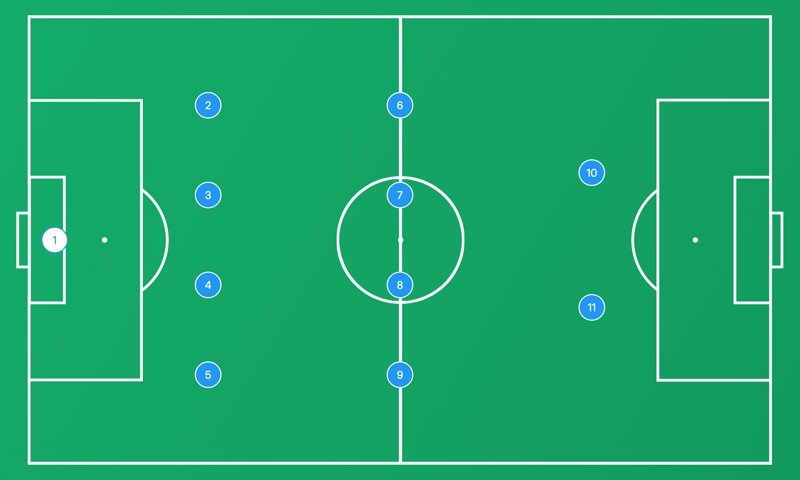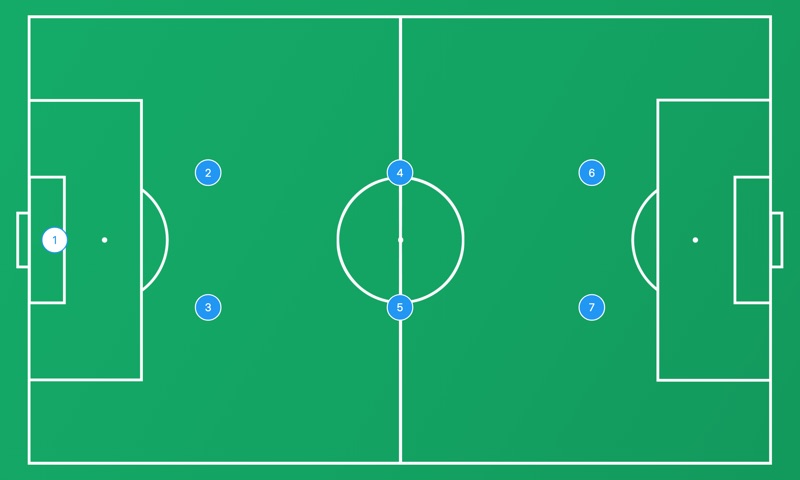
How the 4-4-2 lines up
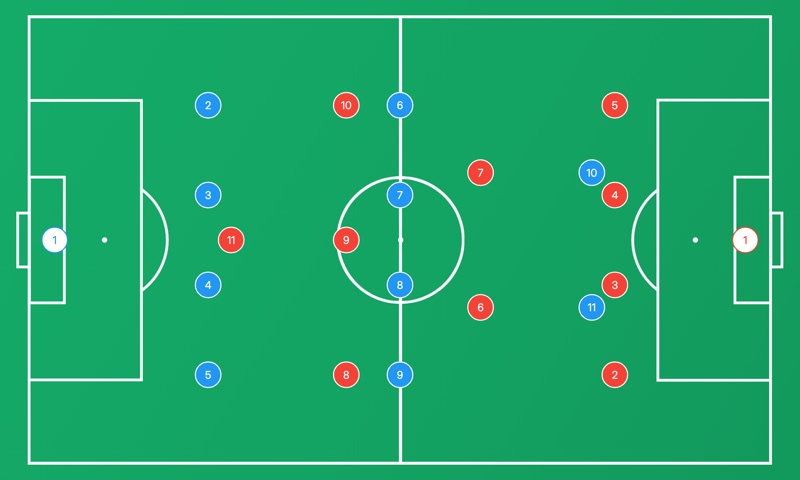
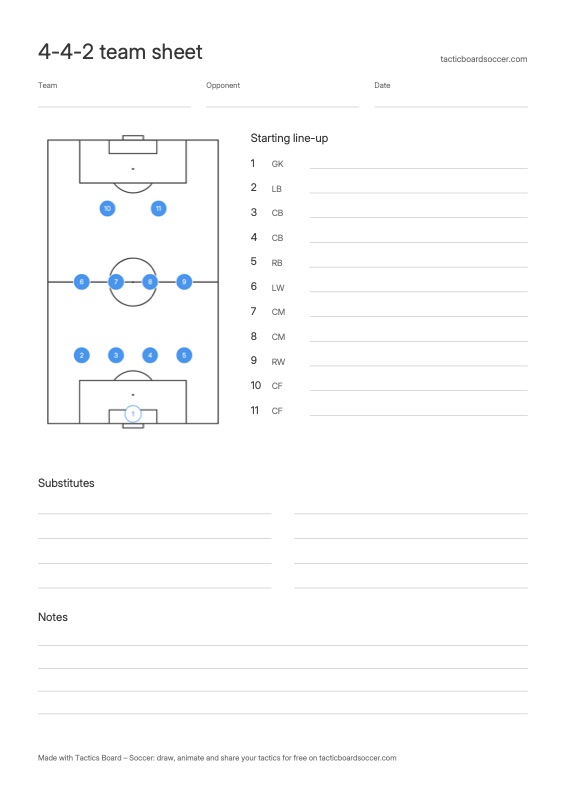
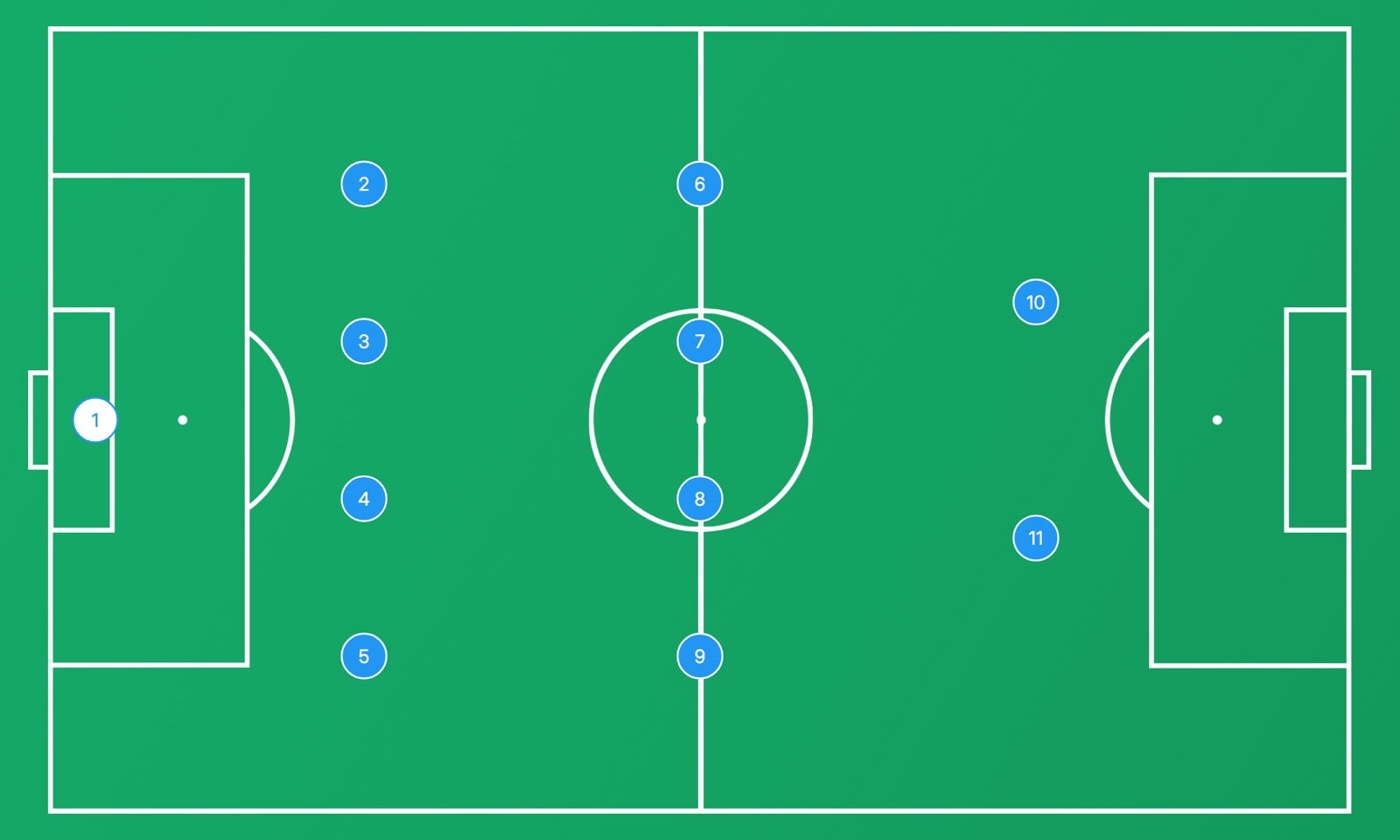
At the back there is a flat four: two centre-backs and two full-backs. In front of them a second line of four: two central midfielders in the middle and two wide midfielders on the flanks. Up front two strikers play as a pair, usually one who attacks the space behind the defence and one who comes short to receive and hold the ball up.
The 4-4-2 is built on pairs: on each flank the full-back and the wide midfielder work together, in the middle the two central midfielders split the jobs, one going forward and one staying, and the two strikers move as a unit.
Strengths of the 4-4-2
- Simple to learn. Every player has a clear zone and a clear partner: that is why it is the shape most youth teams use when they move to 11-a-side.
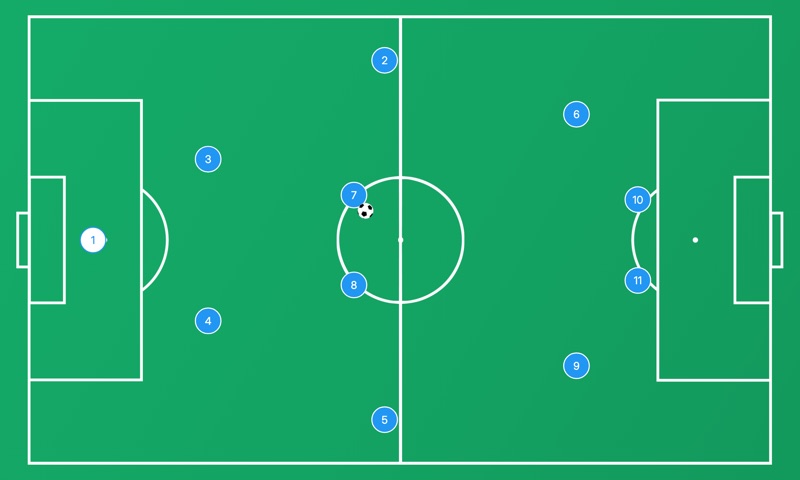
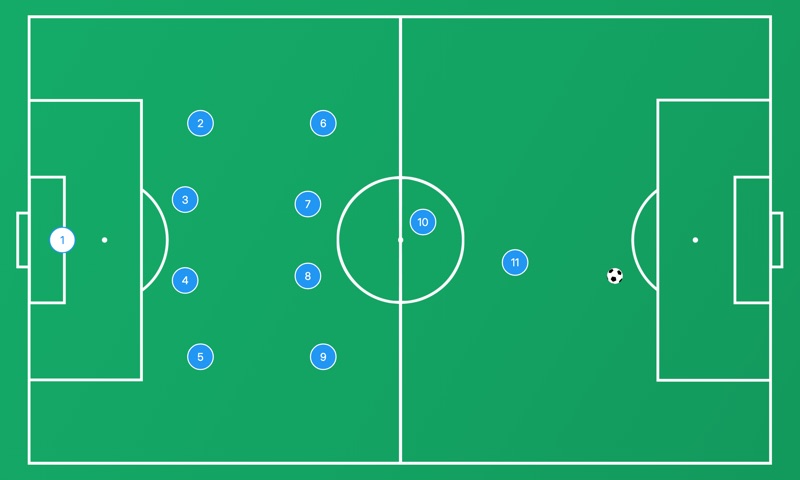
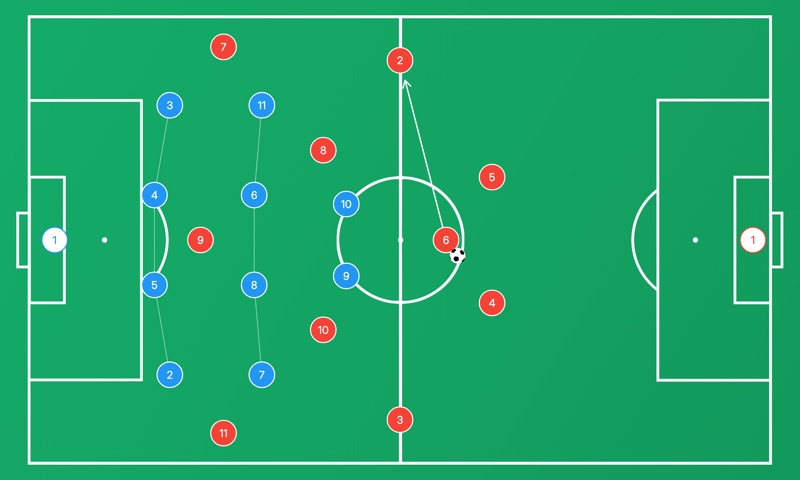
- Two compact lines. Without the ball the two banks of four cover the width of the pitch and leave little space between the lines.
- Two strikers. Against a back four the strikers are two against two in the centre, and one can drop while the other runs in behind.
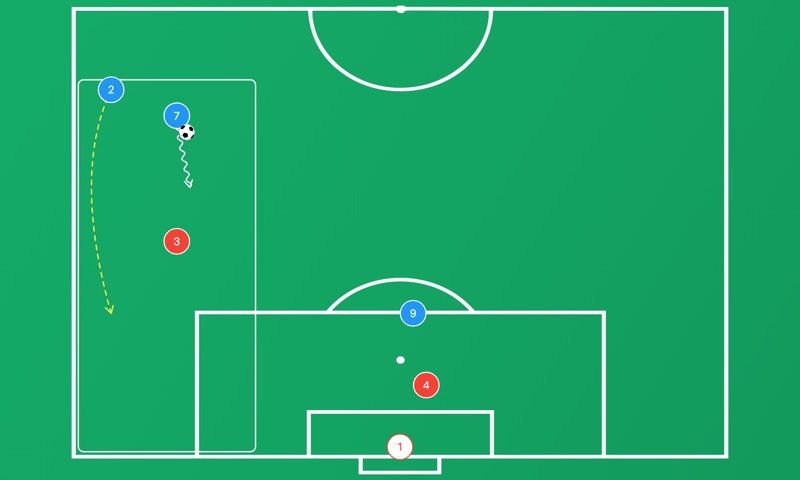
- Width on both flanks. Full-back and wide midfielder can create a two against one on the wing and deliver crosses for two players in the box.
- Quick counter-attacks. When the ball is won, there are already two forwards high up and two wide players ready to break.
Weaknesses of the 4-4-2
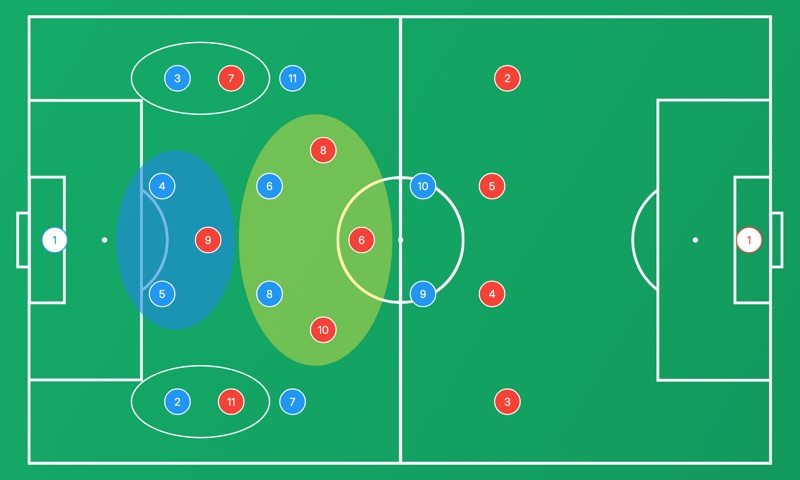
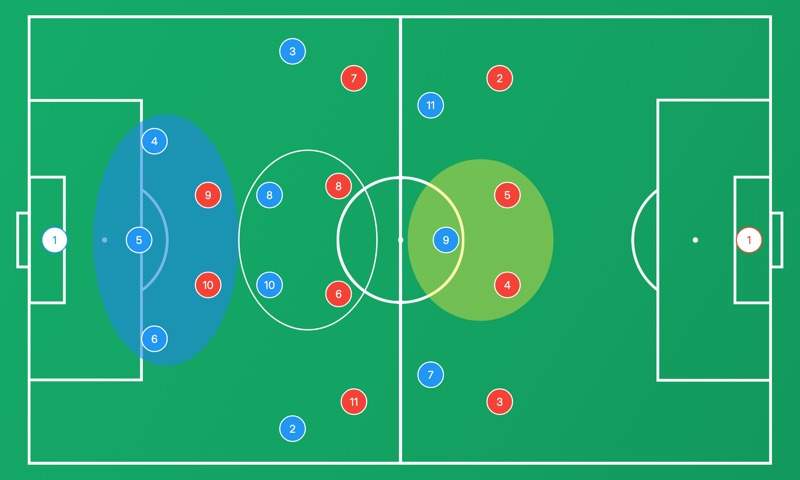
- Outnumbered in midfield. Against a three-man midfield, like that of a 4-3-3 or a 4-2-3-1, the two central midfielders are two against three.
- The space between the lines. An opposing 10 or a striker who drops deep finds room between the midfield and the defence.
- Tired wide midfielders. They have to attack and defend the whole flank: if they do not track back, the full-back is left one against two.
- Less control of the ball. With only two central players, building patient possession is harder and the team often goes long.
Variants of the 4-4-2
- Flat 4-4-2: the classic version, with two lines of four and two strikers side by side.
- Diamond 4-4-2 (4-1-2-1-2): a holding midfielder, two central midfielders and a 10 behind the strikers. It wins the centre but loses the width, which only the full-backs can give.
- 4-4-1-1: one striker drops behind the other to link with the midfield and mark the opposing holding midfielder.
- 4-2-4 in possession: the wide midfielders push up next to the strikers and the team attacks with four.
How to beat a 4-4-2
Teams that beat the 4-4-2 usually win the middle of the pitch. The most common answers are:
- play with three central midfielders (4-3-3, 4-2-3-1, 3-5-2) to have the spare player against its two;
- put a 10, or a striker who drops, in the space between its two lines;
- build with three at the back against its two strikers, so one defender is always free to step forward;
- switch play quickly from one flank to the other before its block can slide across.
How to coach the 4-4-2
Start from the defensive block. Two lines of four sliding together towards the ball are the base of the system: train them with the ball moving from one flank to the other, so the far wide midfielder learns to tuck in. Then work on the flanks, with the full-back and the wide midfielder creating a two against one, and on the movements of the two strikers in the box.
Draw each exercise on the board, animate the movements frame by frame and send it to your players as a video or a PDF sheet before training.
Positions in the 4-4-2
| Position | Job in the 4-4-2 |
|---|---|
| GK · Goalkeeper | Organises the two lines with his voice, covers the space behind the defence and starts the counter-attacks with quick throws. |
| CB · Centre-backs | Mark the two strikers in the centre, win the long balls and keep the line together with the full-backs. |
| LB, RB · Full-backs | Defend one against one on the flank and overlap the wide midfielder to cross when the team attacks. |
| LW, RW · Wide midfielders | Run the whole flank: they cross and attack the far post with the ball, and track back to form the line of four without it. |
| CM · Central midfielders | The pair in the middle: one goes forward to support the strikers, the other stays to protect the defence. |
| CF · Strikers | The partnership up front: one attacks the space behind the defence, the other comes short, holds the ball up and lays it off. |