How the 2-1-2-1 lines up
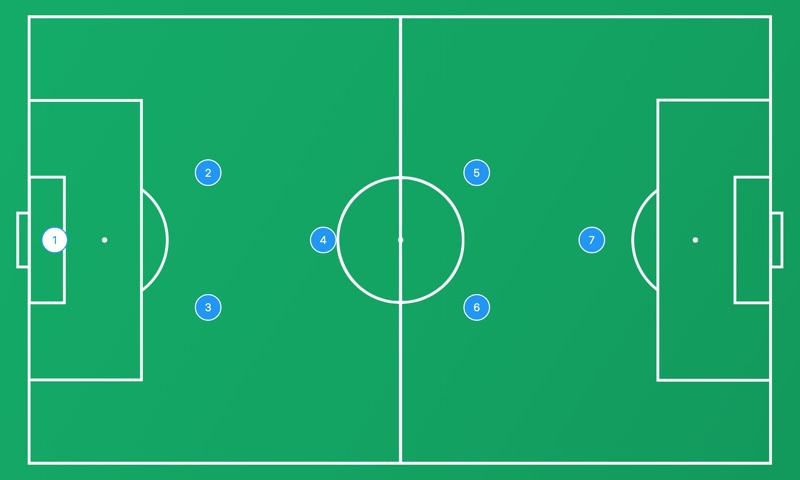
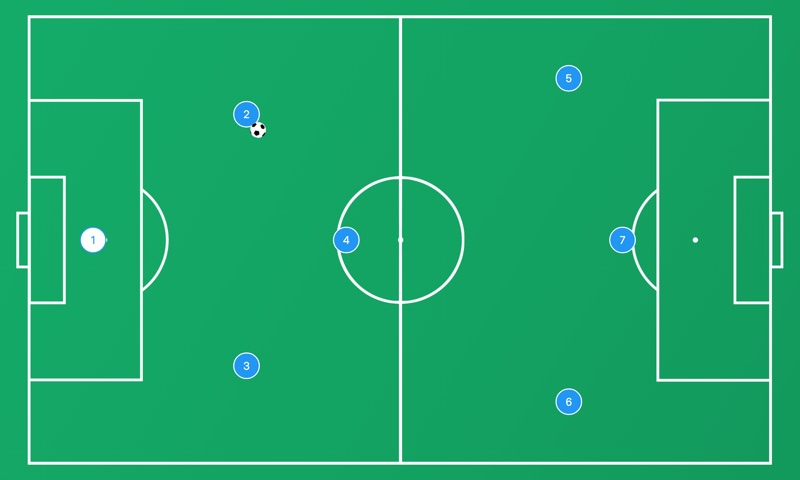
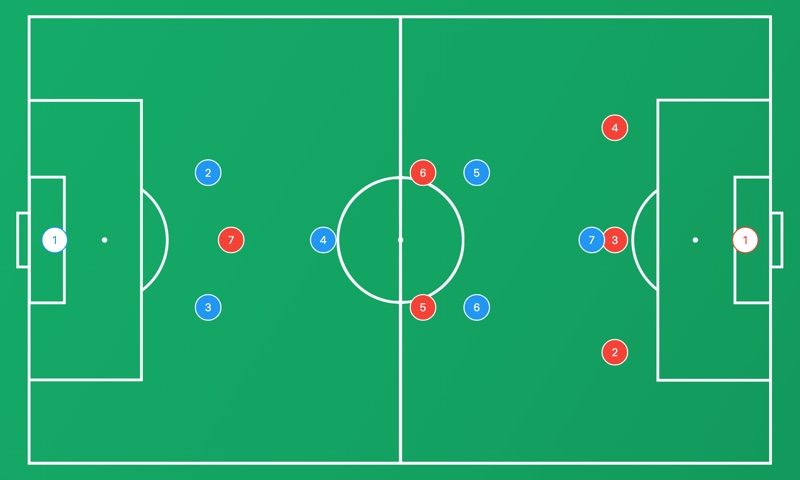
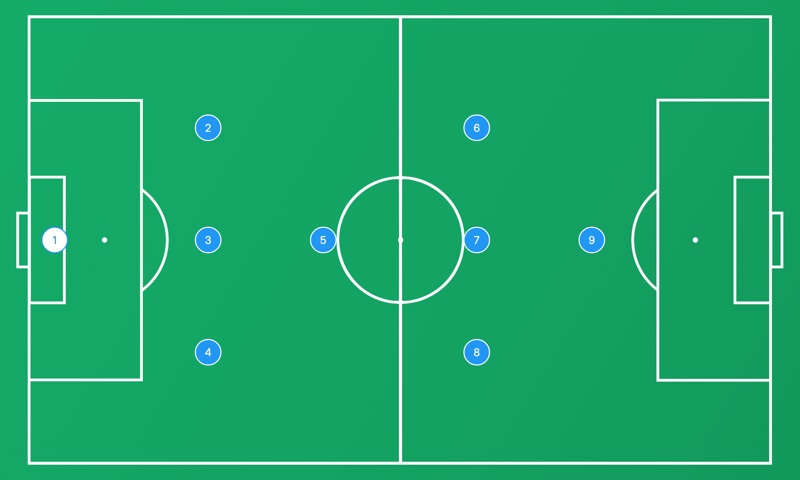
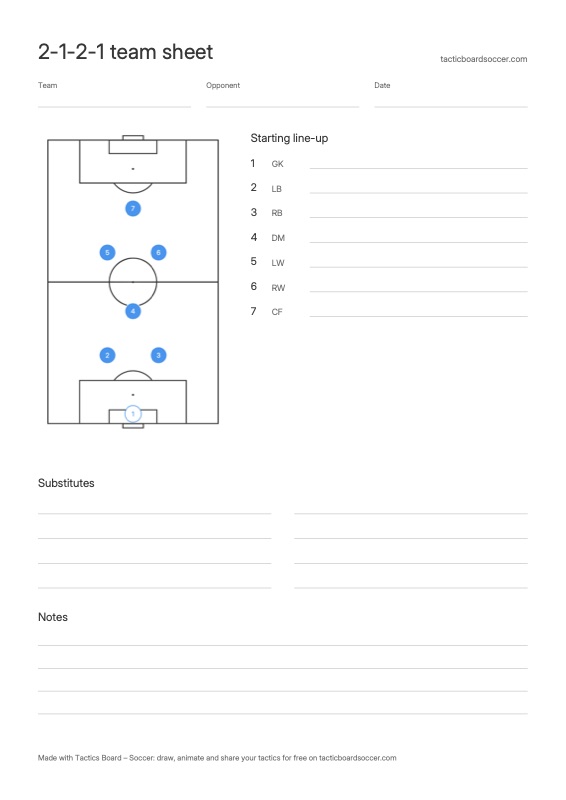
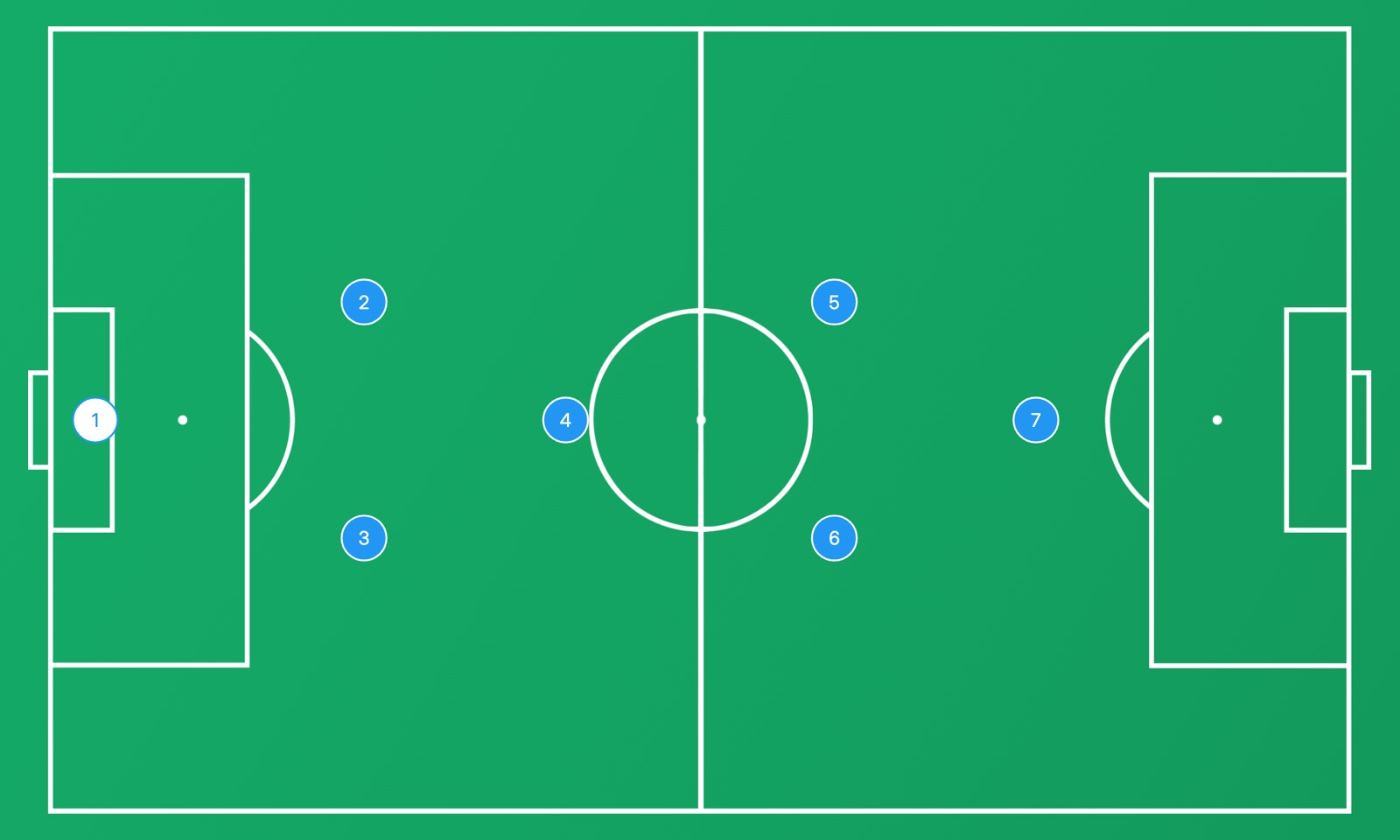
In front of the goalkeeper two defenders split the width of the pitch. Just ahead of them, in the middle, sits one holding midfielder. Higher up, two wide midfielders play on either side, and a single striker leads the line. Draw a line from the holding midfielder to the wide players and on to the striker and you get a diamond: that is why coaches also call it the 7v7 diamond.
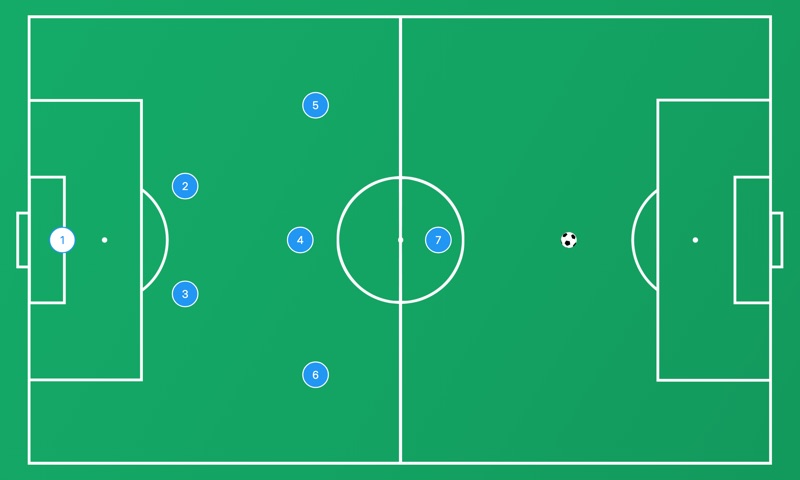
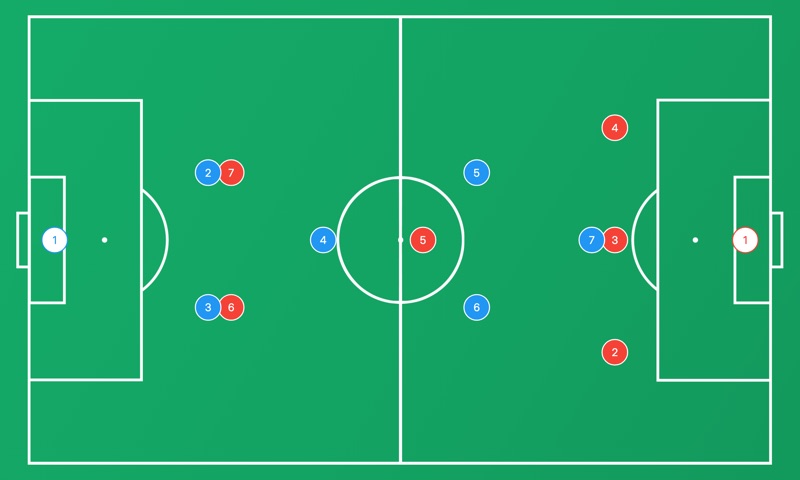
Compared with the 2-3-1 it uses the same players, but the lines are staggered. The holding midfielder drops closer to the defenders and the wide players step up towards the striker. Every player has a teammate in front, one behind and one to the side, so the ball can always move forward in small steps.
Strengths of the 2-1-2-1
- Passing angles everywhere. The diamond gives the player on the ball a teammate in front and two to the sides: the shape itself teaches triangles.
- A screen in front of the defence. The holding midfielder protects the two defenders and is the first pass out from the goalkeeper.
- Three players near the goal. With the wide midfielders high, the striker is rarely alone: crosses and cut-backs always find someone.
- Easy to explain. Each player has one clear area, and the diamond is a picture that even U9 players remember.
- It flexes both ways. The wide players push up to make it a 2-1-3 or drop to make it a 2-3-1, without changing positions.
Weaknesses of the 2-1-2-1
- A gap behind the wide players. With the wide midfielders high, the space between them and the defenders is large: a quick switch finds the opponents' winger free.
- The holding midfielder does a lot. One player covers the whole middle: if they are pulled to one side, the centre opens.
- Only two at the back. Against two strikers it is two against two, with no spare defender: the holding midfielder has to drop to help.
- Tiring for the wide players. They attack next to the striker and defend next to the holding midfielder: in a long game they need rotating.
Variants of the 2-1-2-1
- 2-1-3 with the ball: the wide midfielders go high and wide next to the striker and the defenders spread out. It is how the diamond attacks.
- 2-3-1 without the ball: the wide midfielders drop onto the line of the holding midfielder and the team defends with three across midfield.
- 3-1-2 with a defender dropping: the holding midfielder drops between the two defenders and one wide player joins the striker. More safety against two strikers.
- 1-1-3-1 on the build-up: one defender steps up next to the holding midfielder, so the goalkeeper has an extra pass in the middle.
How to beat a 2-1-2-1
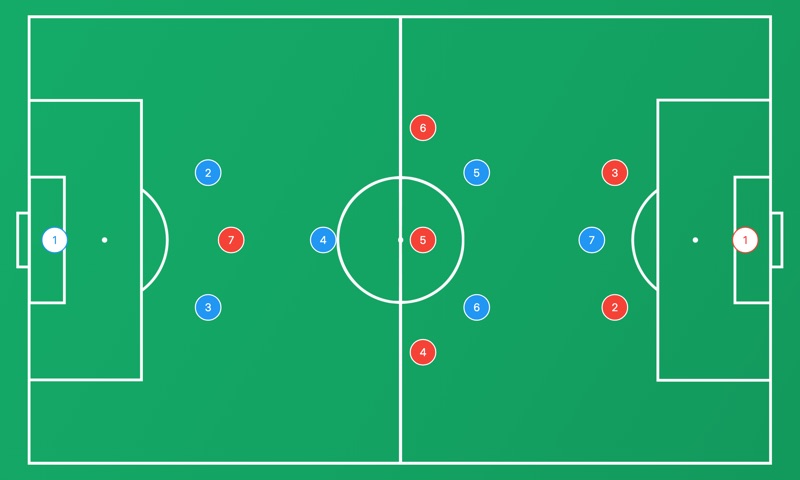
The diamond suffers when its holding midfielder is outnumbered and when the space behind its wide players is attacked. The most common answers are:
- put two players between the lines, on either side of the holding midfielder (2-3-1 or 3-2-1 with an attacking midfielder);
- switch play quickly behind the wide midfielders who have pushed up;
- play with two strikers against the two defenders, so the holding midfielder is pinned back;
- press the holding midfielder when the goalkeeper restarts: without that first pass the 2-1-2-1 has to kick long.
How to coach the 2-1-2-1
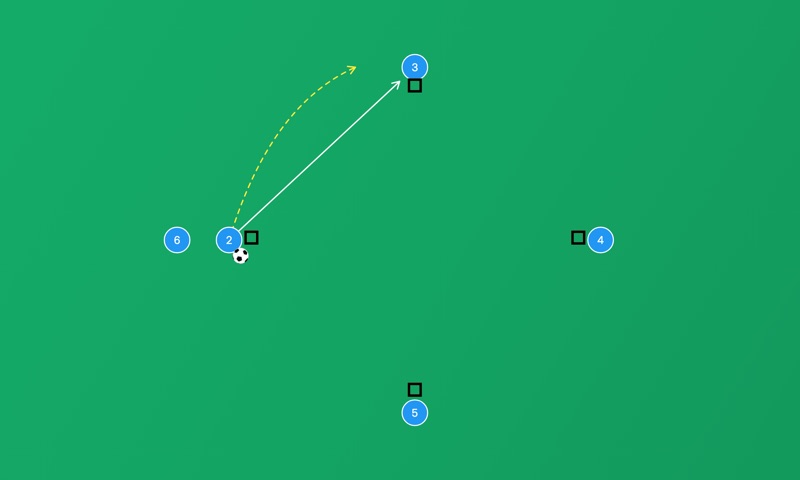
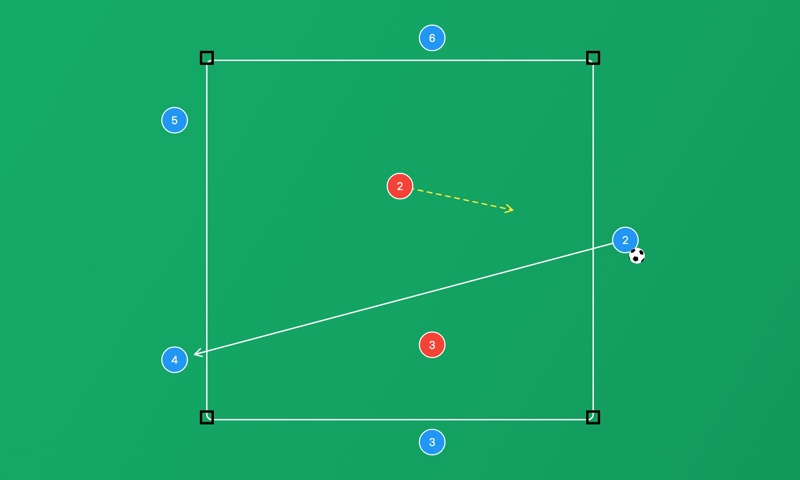
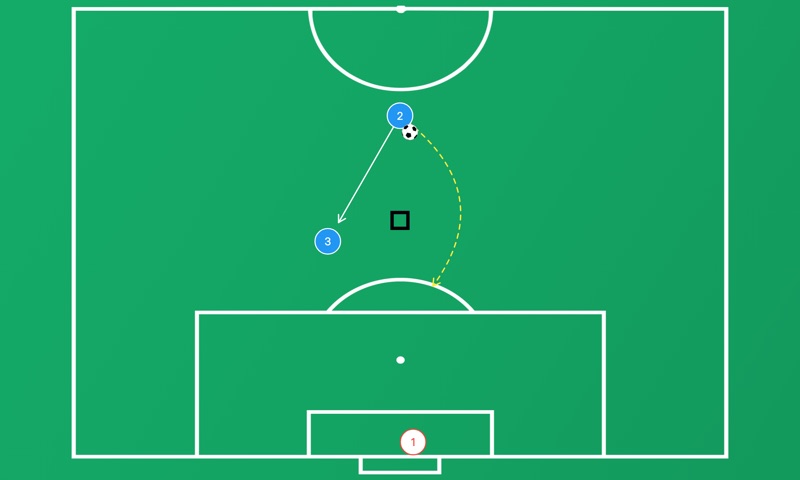
Start from the shape: a passing diamond where the ball goes round and the passer follows it teaches the distances and the angles of the 2-1-2-1 without an opponent. Then add pressure with a rondo, where the free player in the middle learns the job of the holding midfielder: receive, turn and play forward.
For the attack, train the wide midfielders with the striker: a one-two around a defender and a finish is the move that the diamond makes most often near the goal. In the game, check that the wide players drop back when the ball is lost. Draw every exercise on the board, animate it and send it to the parents' chat or print it for the other coaches.
Positions in the 2-1-2-1
| Position | Job in the 2-1-2-1 |
|---|---|
| GK · Goalkeeper | Starts the build-up through the defenders or straight into the holding midfielder, and comes out to cover the space behind the two defenders. |
| LB · RB · Defenders | Split the width of the pitch with the ball and close the middle without it. With only two at the back they must talk and cover for each other. |
| DM · Holding midfielder | The base of the diamond: shows for the ball from the goalkeeper, switches play from one side to the other and screens the defence when the ball is lost. |
| LW · RW · Wide midfielders | Attack on the flanks next to the striker and drop onto the line of the holding midfielder without the ball. The most running in the team. |
| CF · Striker | The top of the diamond: holds the ball up, combines with the wide midfielders and starts the press on the defenders. |