How the box lines up
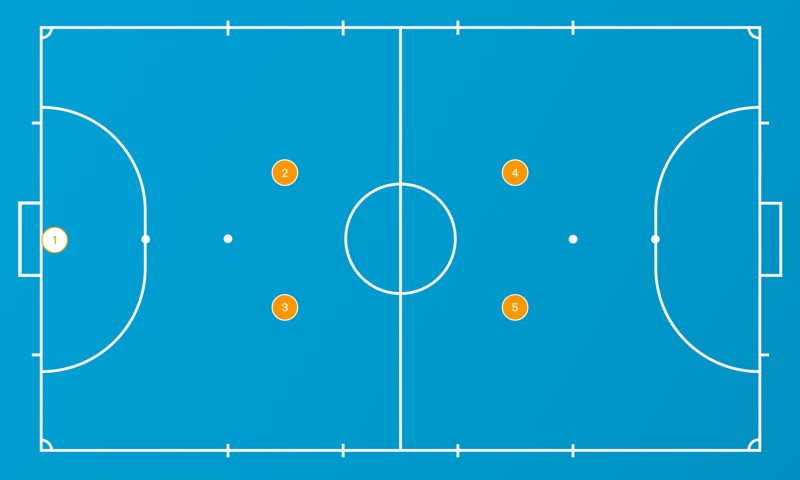
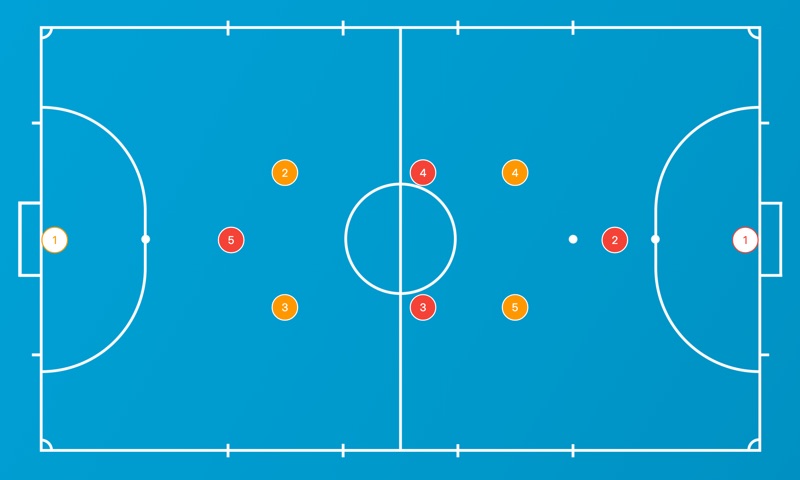
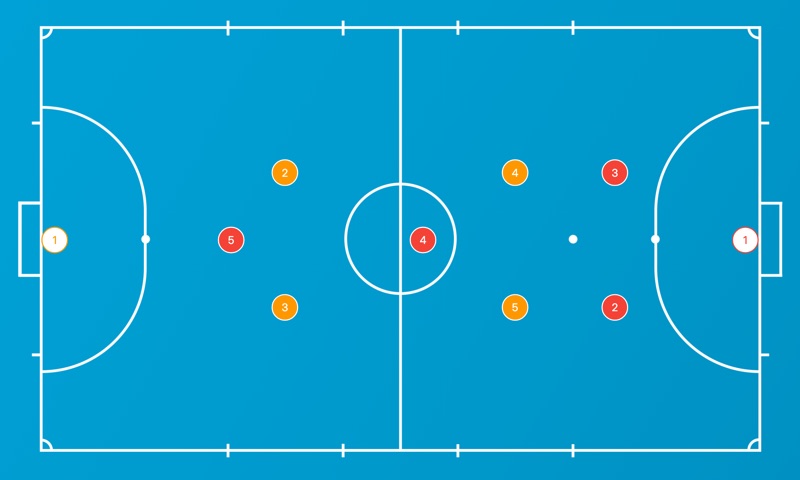
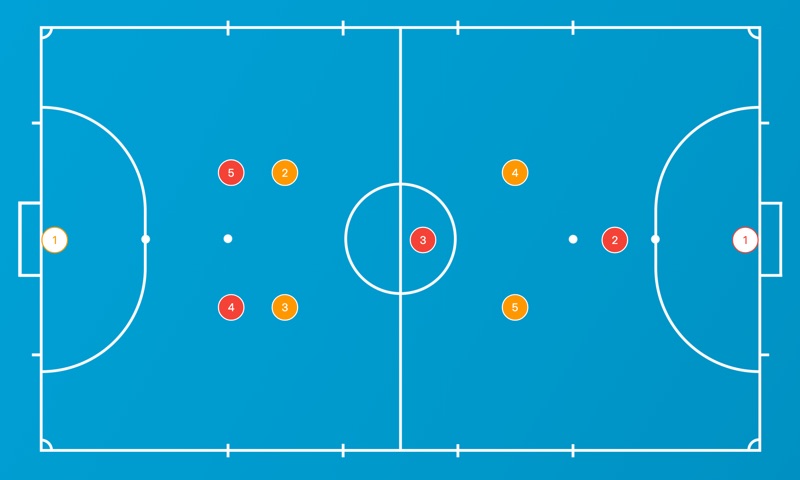
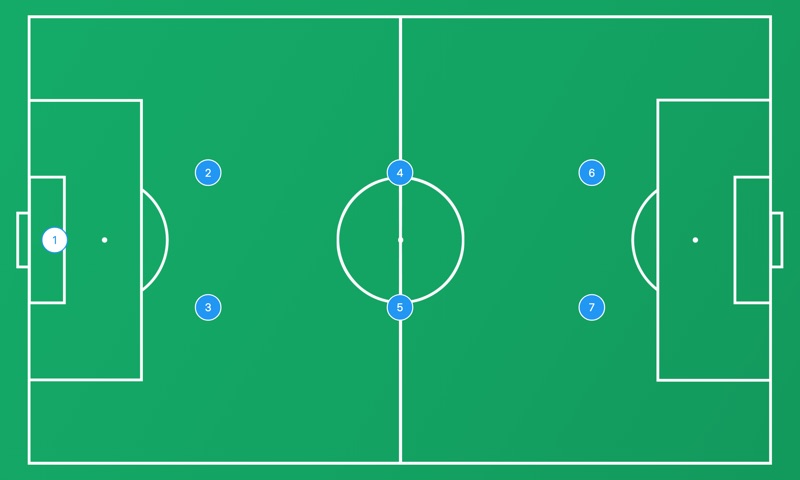
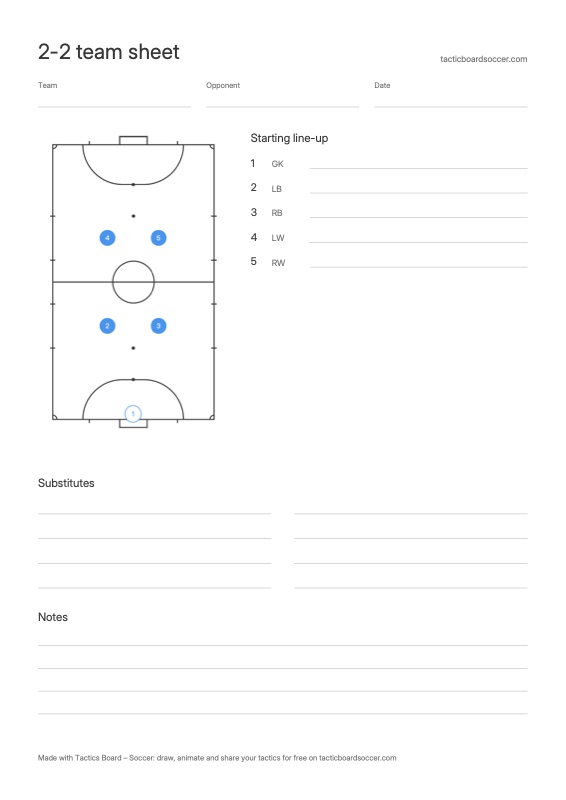
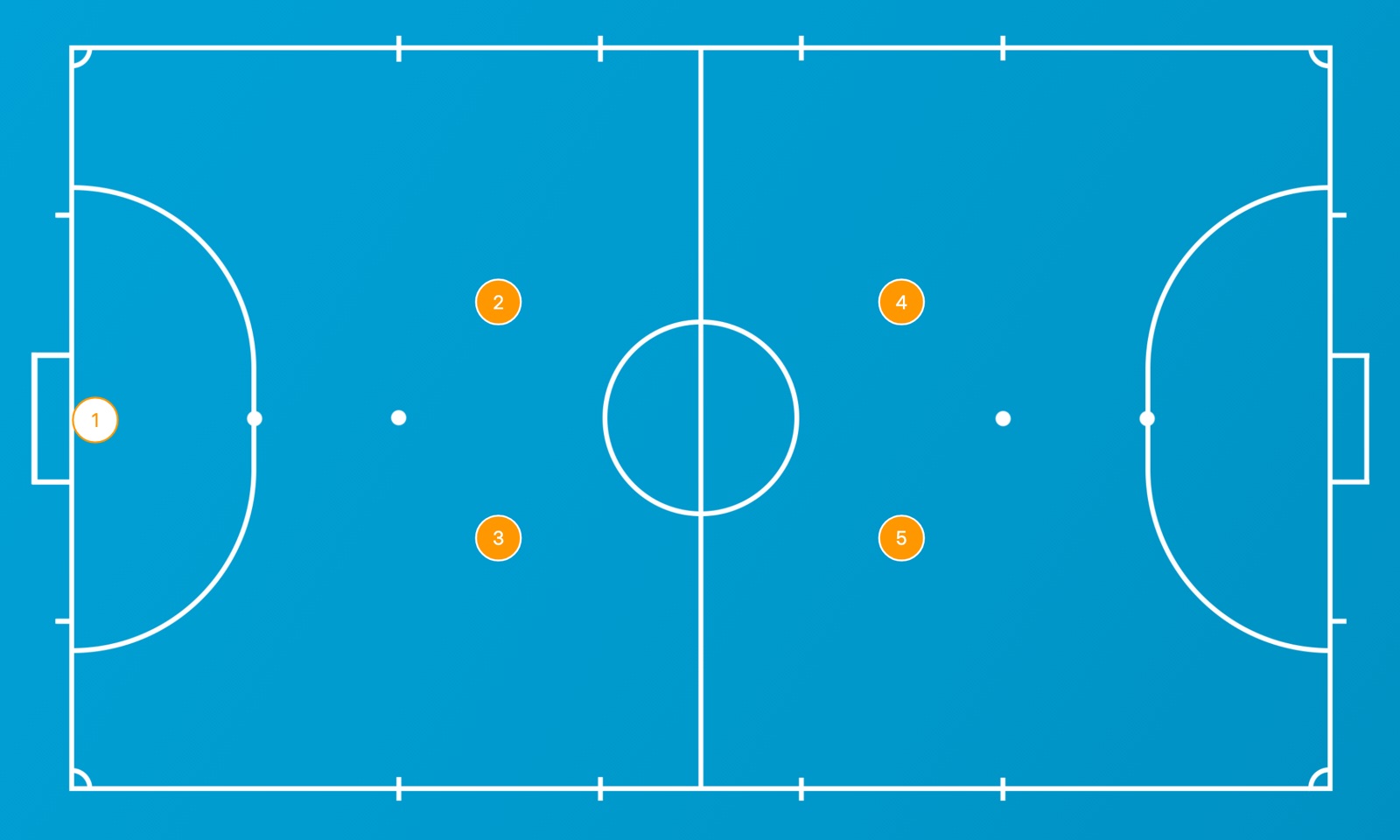
In front of the goalkeeper the two defenders stand side by side, one on the left and one on the right. Higher up the court the two forwards do the same, close to the opponents' defenders. Joined by lines, the four outfield players draw a square: that is why it is called the box, and why some coaches write it 2-0-2, with the zero for the empty middle.
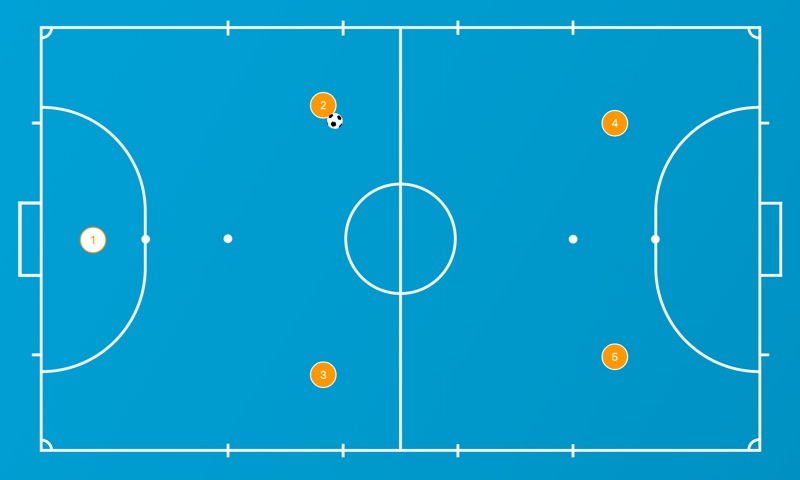
The shape is built on pairs. Each player has a partner beside them and one in front or behind, so the passes go along the touchline or across the court in a diagonal. With two players behind the ball the team is hard to counter-attack; with nobody between the lines, though, the ball can only reach the forwards with a long pass or a run.
Strengths of the box
- Two players behind the ball. If one defender loses it, the other is still there: the box rarely suffers a counter-attack in numbers.
- Easy to learn. Two lines of two, one partner beside you: it is the shape beginners and kids understand first.
- Two forwards together. Against a diamond the two forwards go two against one on the lone fixo.
- A solid zone defence. Without the ball the box closes the middle of the court with four players and pushes the opponents wide.
- Simple moves in attack. The parallel pass and the diagonal pass, followed by a swap, are enough to move the opponents.
Weaknesses of the box
- An empty middle. Nobody plays between the lines: the passes are side to side or long, and the opponents can read them.
- Pairs far apart. If the back pair and the front pair do not move together, the box splits into two teams of two.
- A player between the lines. The pivot of a diamond or the central player of a 2-1-1 receives in the hole in the middle, and nobody is sure who should step out.
- Fewer triangles. Compared with the diamond, the player with the ball has fewer options, so the box needs players who can beat a man one against one.
Variants of the box
- 2-0-2 with two pivots: the forwards stay high at the sides of the area with their back to goal, and the defenders feed them. More presence in front of goal, fewer runs.
- From 2-2 to 3-1: a forward drops between the defenders and the other stays as a pivot. The team switches to the diamond family without changing players.
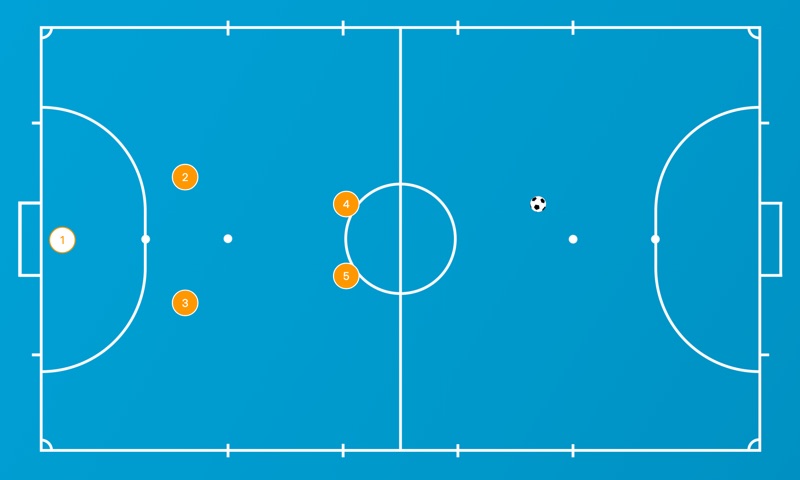
- 4-0: both forwards drop onto the line of the defenders and all four attack the space in behind. Useful when the opponents defend high.
- Box with rotations: the defender passes up the line to the forward and runs past them, the forward drops into their place. The square stays, the players change.
How to beat a box
The box suffers in the middle, where it has nobody. The most common answers are:
- put a player between the lines, a pivot or a central player, who receives in the hole and turns;
- press the back pair: their only passes are to the side or long, so a forward who covers the side pass forces the long ball;
- overload one flank with three players, so the box has to slide and leaves the far side open;
- attack with wingers in the gaps between the pairs, as the diamond does.
How to coach the box
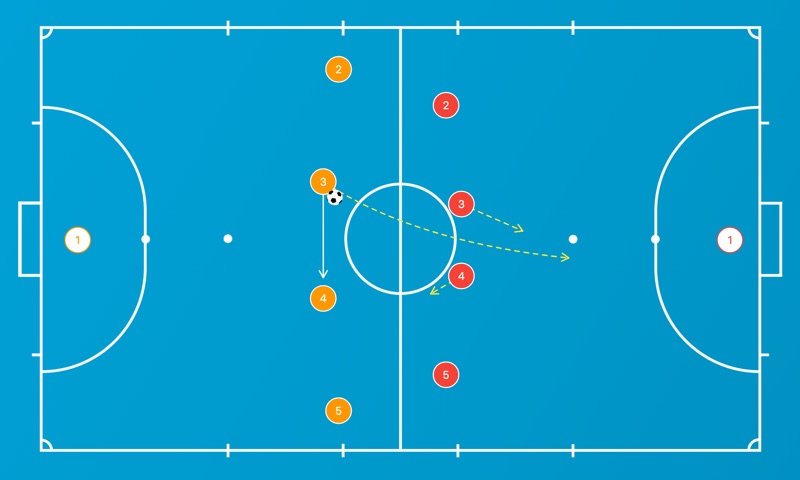
Start from the two classic moves of the 2-2: the parallel, where the defender passes up the touchline and follows the ball, and the diagonal, where the pass crosses the court and the passer swaps with the forward on the other side. Repeat them without opponents until the square always rebuilds itself. Then add the 4-0, so the forwards learn to drop and the defenders learn to cut in behind.
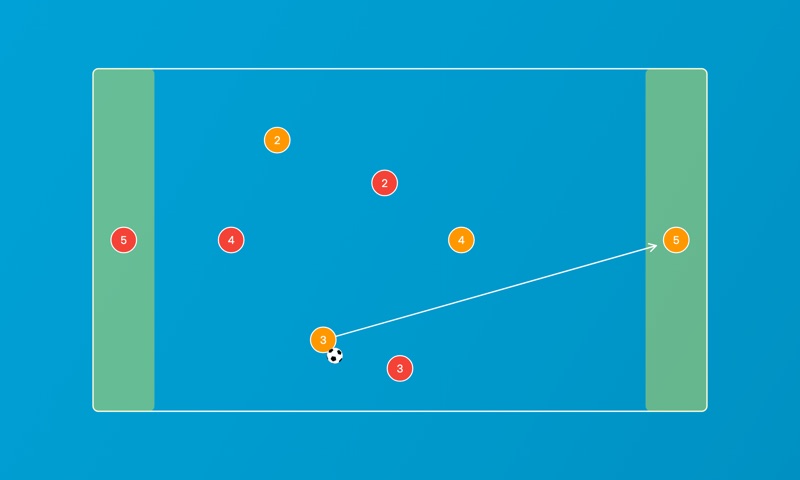
Finish with the game: five against five with goalkeepers, where a goal counts double if the whole team is in the opponents' half, so the two pairs learn to move up and back as one block. Draw every move on the board, animate it and show it to the team on the TV or in the team chat.
Positions in the futsal box
| Position | Job in the box |
|---|---|
| GK · Goalkeeper | The first passer: plays to the two defenders with hands and feet, and throws long to a forward when the opponents press high. |
| LB · RB · Defenders | The back pair: start the play with the parallel and the diagonal pass, cover each other when one steps out and never leave the middle empty together. |
| LW · RW · Forwards | The front pair: one shows for the ball, the other attacks the space, they swap with the defenders in the rotations and start the press without the ball. |