How the 3-2-1 lines up
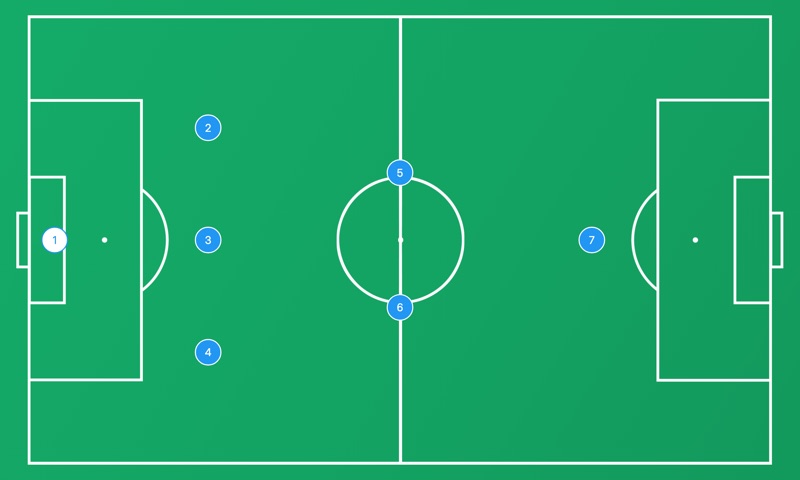
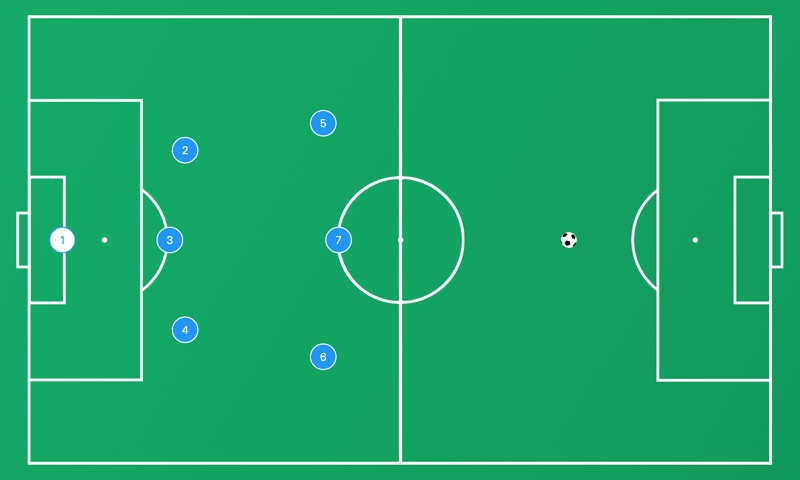
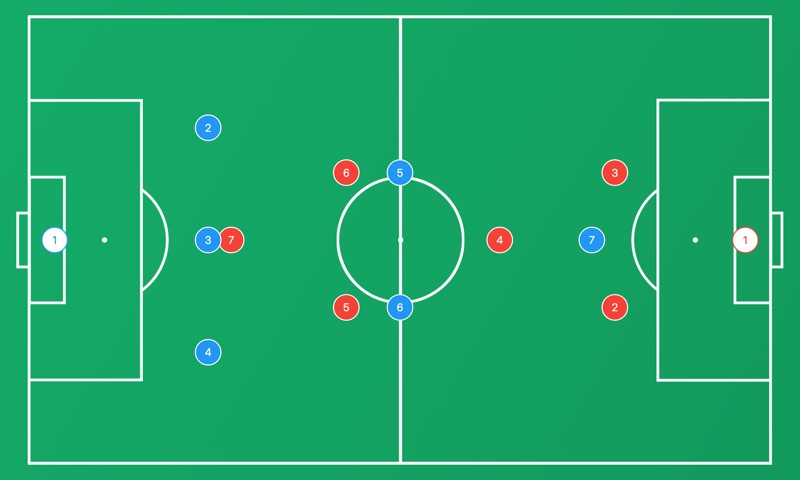
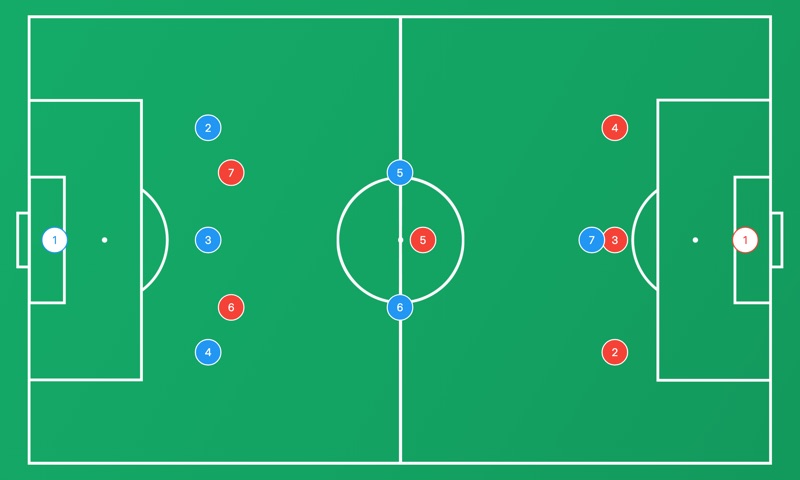
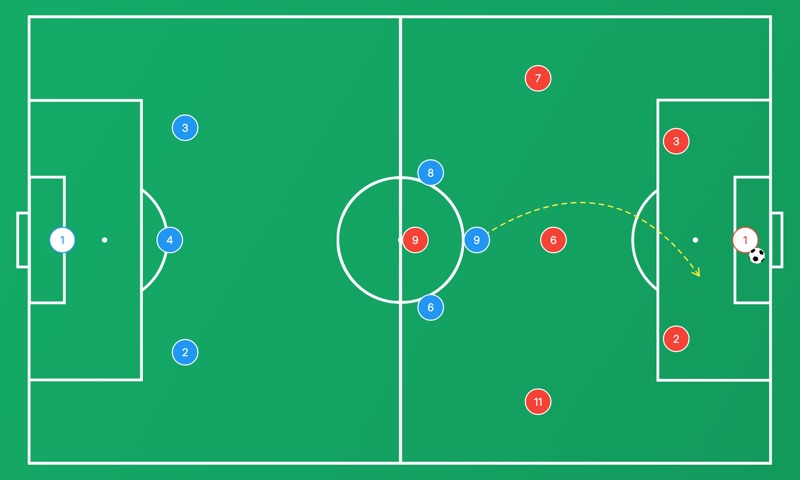
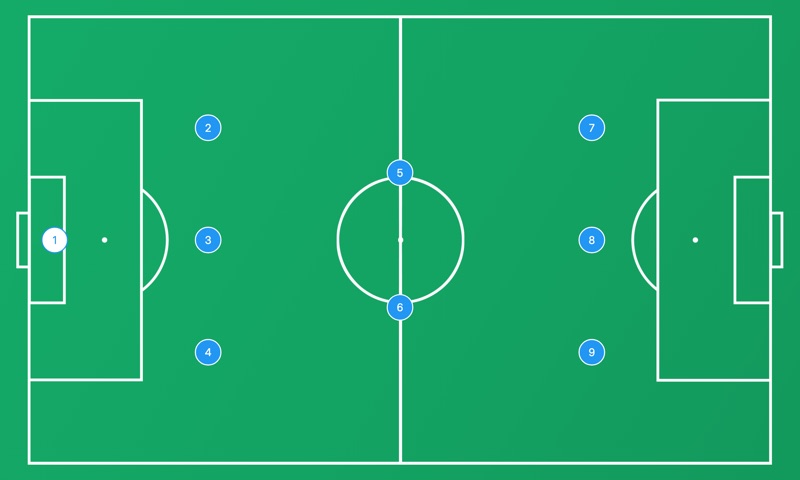
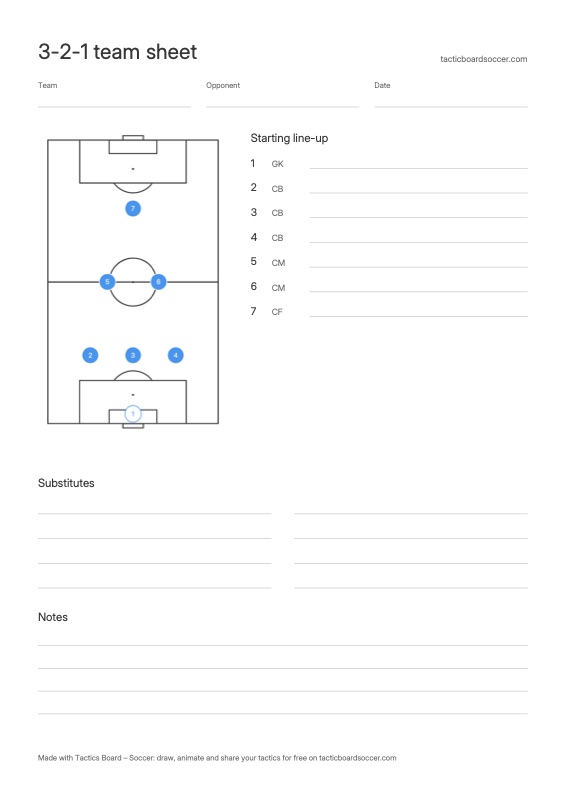
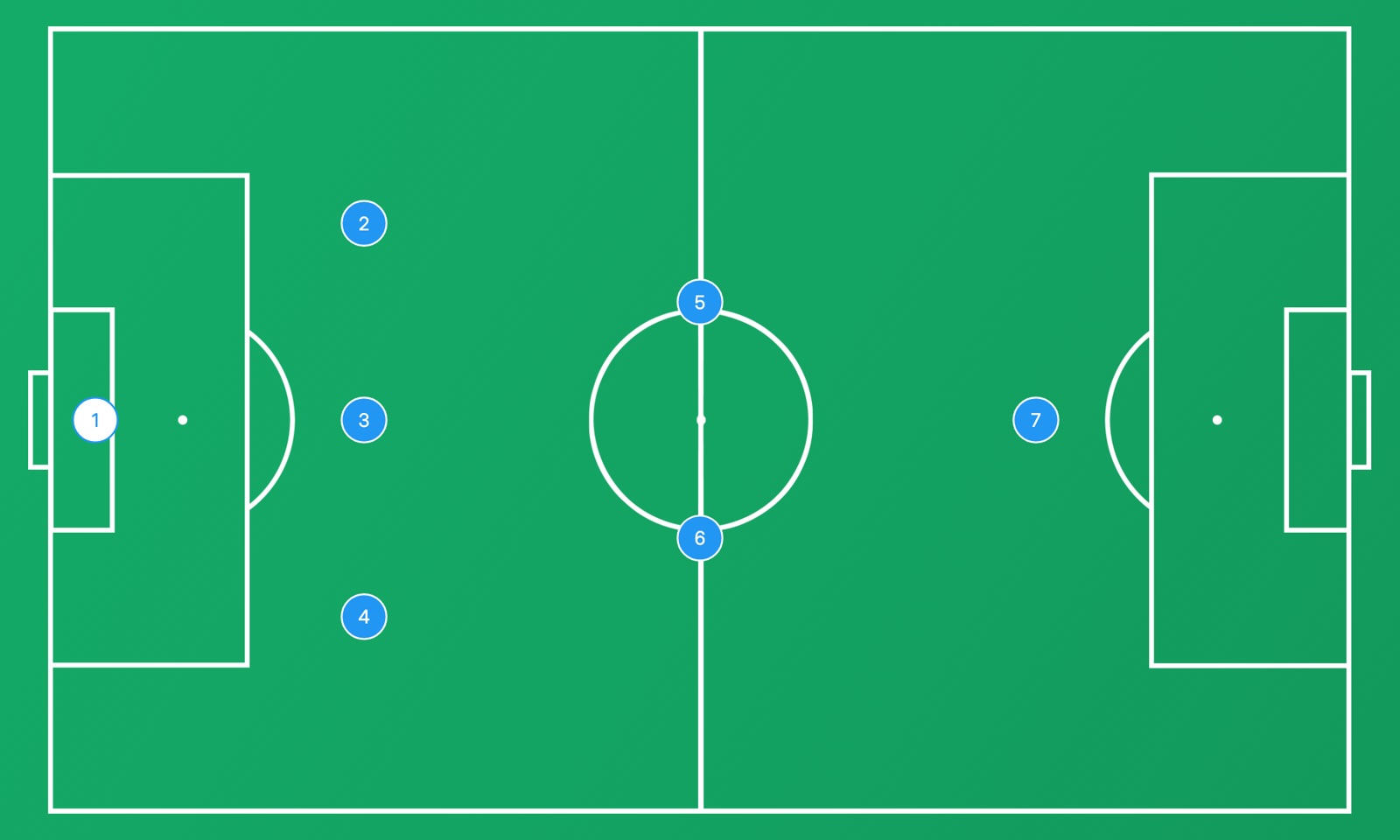
In front of the goalkeeper three defenders cover the whole width of the pitch: one in the middle and one on each side. Two central midfielders play side by side just ahead of them, and a single striker leads the line. It is the mirror image of the 2-3-1: one player moves from midfield to the back.
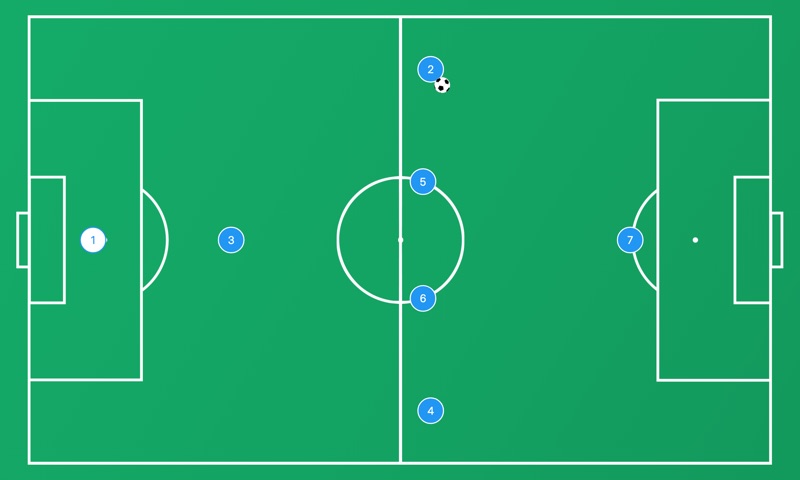
The key players are the two outside defenders. On paper they are centre-backs, but in a good 3-2-1 they are the ones who give the team its width: when the ball is safe they step up the touchline into midfield, when it is lost they drop back into the three. The two midfielders hold the middle and the striker gives the team someone to aim for.
Strengths of the 3-2-1
- Always a spare defender. Against one striker it is three against one at the back, against two it is still three against two: one player can always cover.
- Easy to build from the back. The goalkeeper has three defenders spread across the pitch to pass to, so the team does not need to kick it long.
- Two midfielders in the middle. The centre is closed: the opponents find it hard to play through the two midfielders and the three defenders behind them.
- It teaches defending. Covering, sliding and stepping out are learned in a back three, with a teammate always close.
- Counterattacks. When the ball is won deep, the outside defenders and the midfielders have space in front of them to run into.
Weaknesses of the 3-2-1
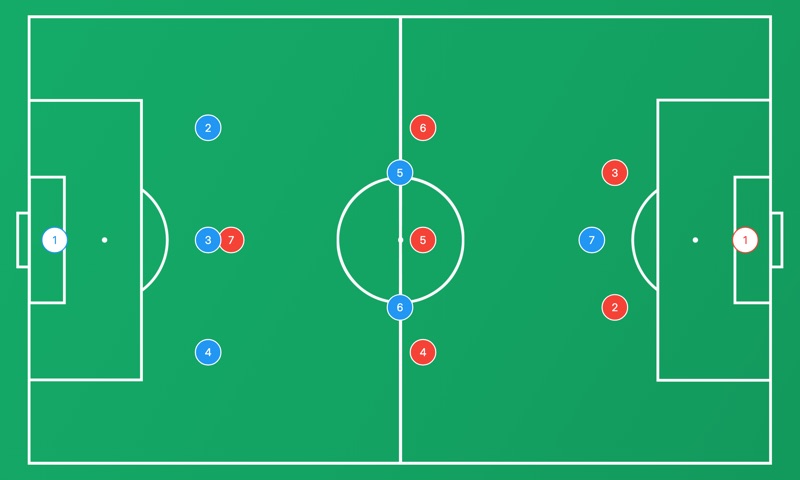
- Outnumbered in midfield. Against a 2-3-1 the two midfielders face three: if nobody steps in to help, the opponents always have a free player between the lines.
- Empty flanks. There are no wide midfielders: if the outside defenders do not step up, the team has no width and the opponents' wide players run free.
- A lonely striker. Often one against two or three defenders: the number 9 has to hold the ball until the midfielders arrive.
- It can become too defensive. With seven players, three at the back and a striker who drops are a lot of players behind the ball: the team defends well but scores little.
Variants of the 3-2-1
- 1-4-1 with the ball: both outside defenders push into midfield and the central defender stays with the goalkeeper. It is how the 3-2-1 attacks with width.
- 3-1-2: one midfielder sits in front of the defence and the other plays as a second striker. More presence in the box, less control in the middle.
- 2-3-1 on one side: only the outside defender on the strong side pushes up, the other stays in a back two. A good answer when one flank of the opponents is weaker.
- 3-3 without the ball: the striker drops between the two midfielders, so the team defends with two lines of three.
How to beat a 3-2-1
The 3-2-1 suffers when its two midfielders are outnumbered and its outside defenders are pinned back. The most common answers are:
- play with three midfielders (2-3-1) and find the free one between the lines;
- keep two wide players high, so the outside defenders cannot step up without leaving space behind them;
- switch play from one side to the other: two midfielders cannot cover the whole width;
- press the central defender: when the ball goes back to them the 3-2-1 has to start the build-up again.
How to coach the 3-2-1
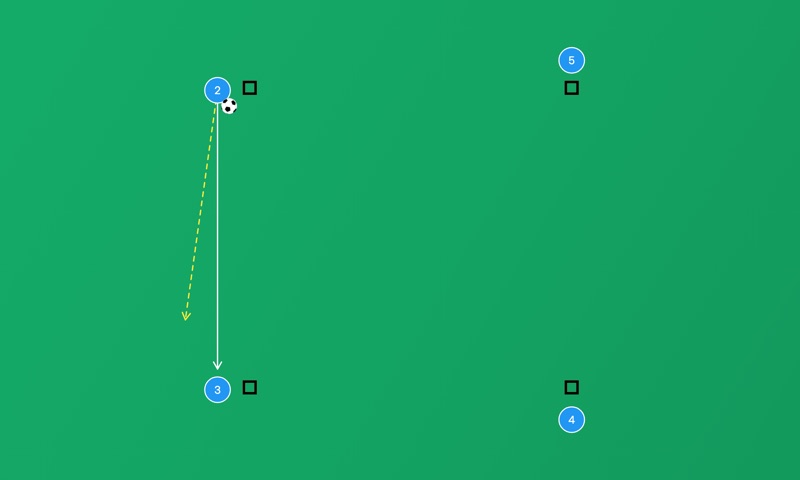
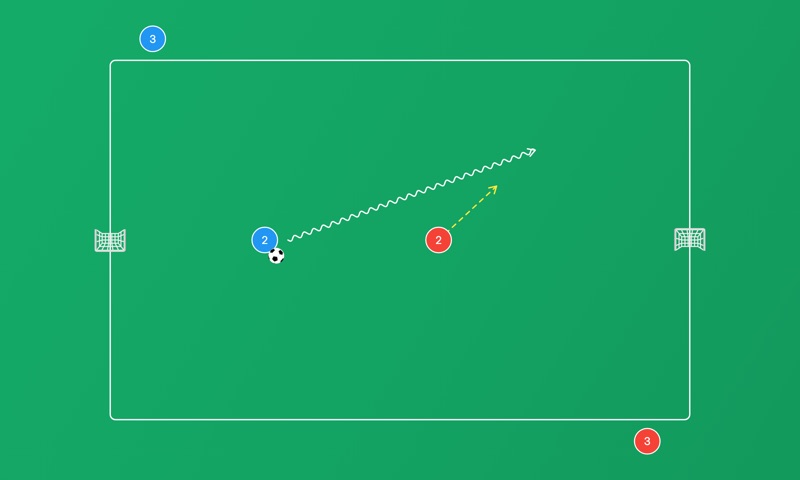
Start from the build-up: goalkeeper and three defenders against one or two pressers, with the goal of passing into a midfielder. Then teach the outside defenders when to step up: as soon as the ball reaches the far side, the near outside defender pushes up the touchline and the central defender and goalkeeper stay behind. A passing square with an overlap trains exactly that run.
For defending, practise the slide of the back three: the defender on the ball side steps out, the other two close the middle. Finish with 1v1 games for the outside defenders, who face the opponents' wide players on every flank. Draw every exercise on the board, animate it and send it to the parents' chat or print it for the other coaches.
Positions in the 3-2-1
| Position | Job in the 3-2-1 |
|---|---|
| GK · Goalkeeper | Starts the build-up with three defenders to pass to and stays ready to come out when an outside defender has pushed up. |
| CB · Outside defenders | Defend their side of the back three and, when the ball is safe, step up the touchline to give the team its width. |
| CB · Central defender | Stays behind the ball with the goalkeeper, covers the space behind the outside defenders and organises the line. |
| CM · Midfielders | Hold the middle in a pair: one shows for the ball from the defenders, the other gets close to the striker. Without the ball they screen the defence. |
| CF · Striker | Holds the ball up against two or three defenders, lays it off to the midfielders and starts the press on the goalkeeper's restart. |