How the diamond lines up
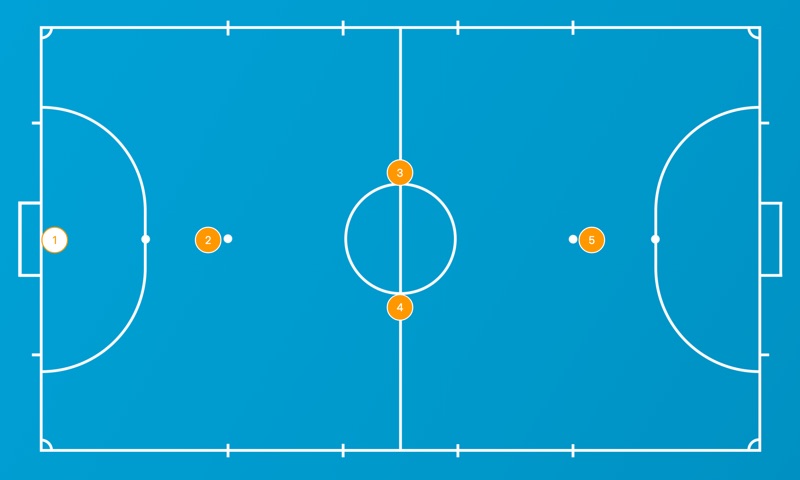
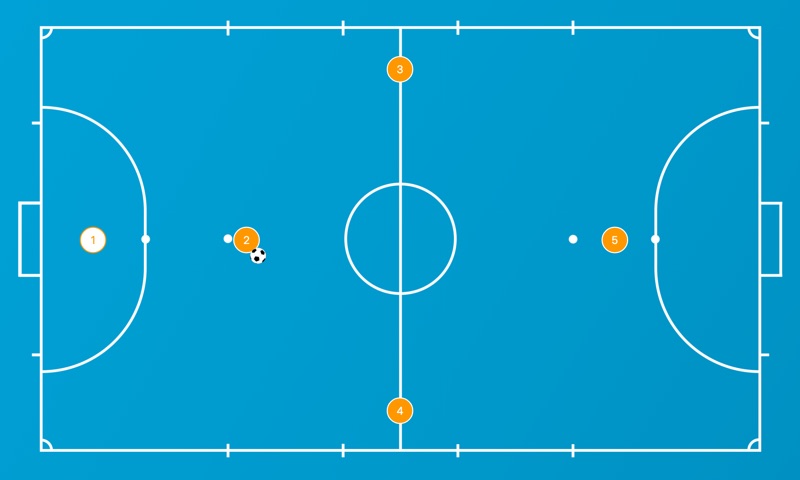
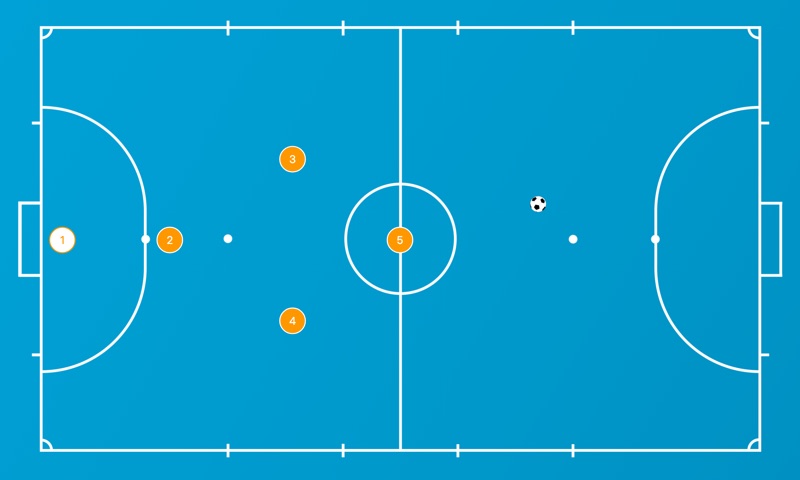
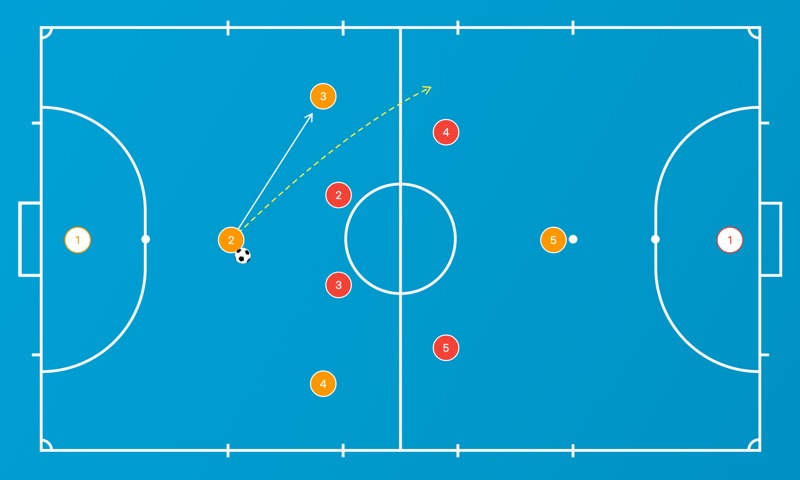
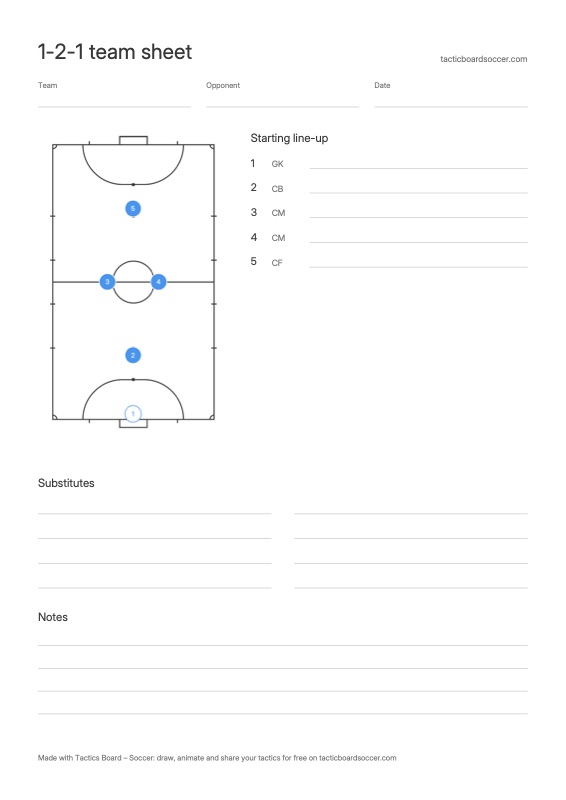
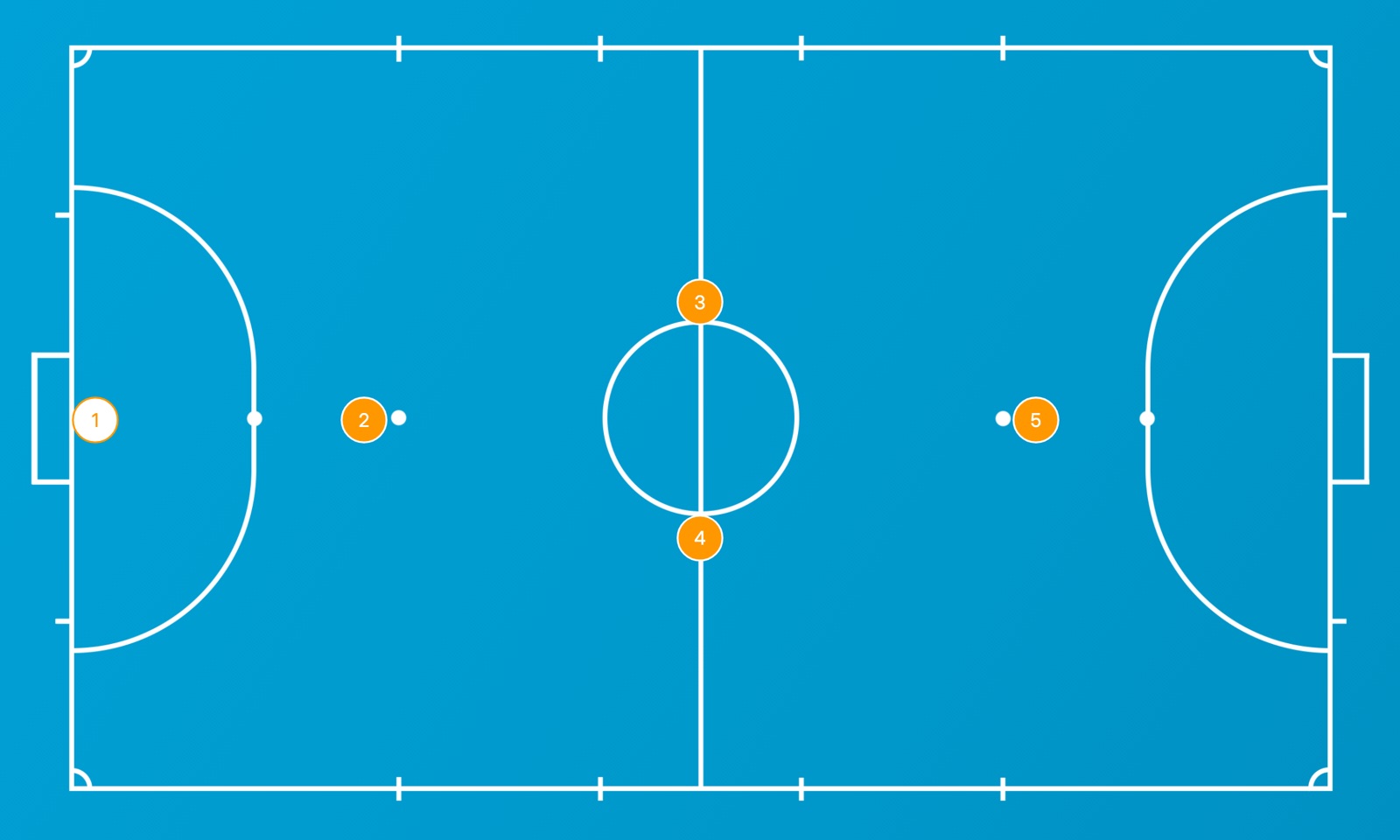
In front of the goalkeeper stands the fixo, the last outfield player, who starts the play and covers the middle. Halfway up the court the two wingers (alas) take one side each, and at the top the pivot plays with their back to goal, close to the opponents' defenders. Joined by lines, the four outfield players draw a diamond: that is why it is called 1-2-1, and many coaches call it the 3-1, because the fixo and the two wingers often end up on the same line.
The strength of the shape is in its triangles. Fixo and wingers, wingers and pivot: whoever has the ball always has a teammate to the side and one further forward. With a single player behind the ball, though, every pass the fixo gives away can turn into a counter-attack.
Strengths of the diamond
- Width and depth together. The wingers stretch the court, the pivot pins the defenders back: the opponents cannot squeeze both.
- Natural triangles. Every player has two passing lanes, which makes it the easiest shape for keeping the ball.
- A reference up front. The pivot holds the ball, lays it off and turns: the team can play long from the goalkeeper and climb up the court.
- It is the base of rotations. The 3-1 rotation, with the fixo who passes to the winger and follows, starts from this shape.
- Good against the box. Against a 2-2 the wingers find the space between the opponents' pairs.
Weaknesses of the diamond
- Only one player behind the ball. If the fixo loses it, the opponents attack in two or three against one.
- The wingers run a lot. They attack the flank and must track back next to the fixo, every time.
- A predictable pivot. If the team only plays into the pivot, the opponents double up on them and steal the ball.
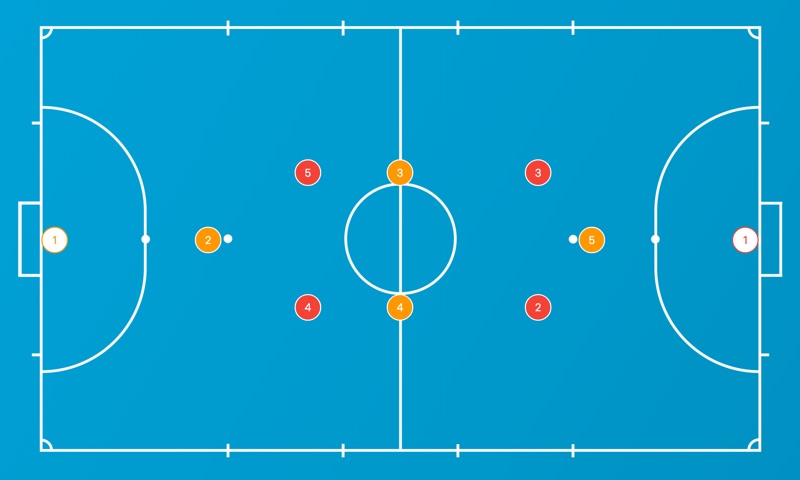
- Against two strikers. A 1-1-2 or a 2-2 with two high players puts the fixo in a two against one unless a winger drops.
Variants of the diamond
- 3-1: the fixo and the two wingers on the same line, the pivot ahead. More solid at the back, with less depth in the middle.
- Diamond with rotations: the fixo passes to a winger and runs into their position, the winger takes the place of the fixo. The shape stays, the players change.
- 4-0: the pivot drops on the line of the others and all four attack the space in behind. Useful when the opponents mark the pivot tightly.
- 2-2 out of possession: one winger drops next to the fixo, the other next to the pivot, to defend against two strikers.
How to beat a diamond
The diamond suffers when its fixo is alone and its wingers are far from the middle. The most common answers are:
- play with two strikers (1-1-2 or 2-2) to go two against one on the fixo;
- press the fixo when they receive from the goalkeeper: if they lose the ball, nobody is behind;
- double up on the pivot as soon as they receive with their back to goal;
- switch play quickly from one side to the other, so the winger on the far side has to run the whole width to defend.
How to coach the diamond
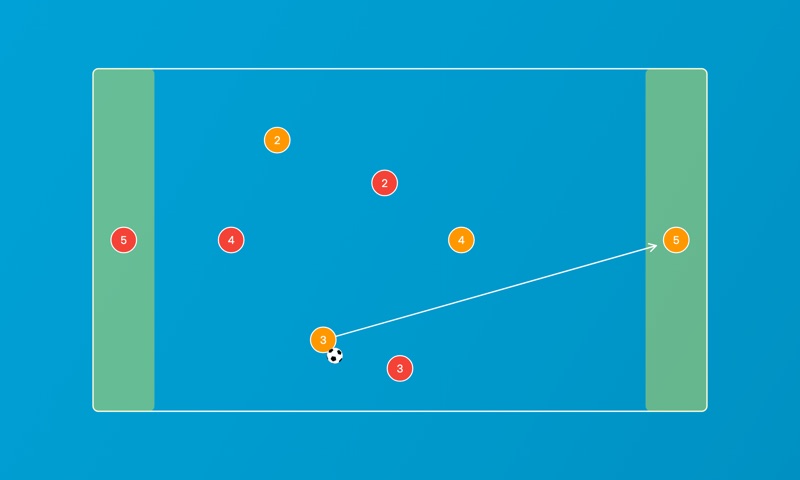
Start from the 3-1 rotation: fixo, two wingers and a pivot pass the ball and swap positions without losing the shape. Then train the ball into the pivot: three against three with a pivot per team at the end, where the point counts when the pivot receives and plays it back to a teammate. That teaches the pivot to show and the others to support.
Finish with the game: five against five with goalkeepers, where a goal counts double if the whole team is in the opponents' half, so the diamond learns to move up and back as one block. Draw every rotation on the board, animate it and show it to the team on the TV or in the team chat.
Positions in the futsal diamond
| Position | Job in the diamond |
|---|---|
| GK · Goalkeeper | The first passer: plays with their hands and feet to the fixo or the wingers, and can throw long to the pivot to skip the press. |
| CB · Fixo | The last outfield player: starts the play, covers the middle when the ball is lost and is the first to rotate with the winger. |
| CM · Wingers (alas) | Take one side each: give width, attack one against one, cut inside, and track back next to the fixo when the team defends. |
| CF · Pivot | Plays with their back to goal against the defenders: holds the ball, lays it off for the wingers, turns and shoots, and starts the press. |